

Are you struggling to select the right butterfly valve for water treatment projects without over-engineering your system or risking premature failure? Choosing between wafer, flanged, double eccentric, and triple offset types can make or break your pipeline’s efficiency and operational lifespan.
As fluid control specialists, we know that matching the exact valve geometry to your specific medium—whether it’s raw municipal water or abrasive sludge—is crucial for a reliable system. A single miscalculation can lead to devastating pressure drops, seat wear, or system downtime.
In this definitive engineering guide, we will break down structural designs, eliminate the guesswork, and show you exactly how to specify the perfect valve for your infrastructure.
Let’s dive right in.
The Critical Role of Butterfly Valves in Water Treatment
Modern water and wastewater infrastructure faces unprecedented challenges. Operators must manage skyrocketing flow volumes, combat chemical corrosion, and minimize costly downtime, all while operating within tight municipal budgets. In large-scale systems, selecting the wrong flow control mechanism leads to catastrophic seat wear, line pressure drops, and frequent maintenance headaches.
To overcome these hurdles, the global industry relies on the butterfly valve for water treatment as the gold standard for reliable isolation and throttling.
Why Butterfly Valves Dominate the Industry
Compared to traditional gate or ball valves, butterfly valves offer a superior balance of performance and economy, especially in large-diameter piping networks.
- Compact Space Savings: Their face-to-face dimensions are significantly shorter than gate valves, radically reducing the overall footprint of the piping skid.
- Quarter-Turn Efficiency: A simple 90-degree rotation moves the valve from fully open to fully closed, allowing for rapid shutoff and lower automated actuation costs.
- Cost-Effectiveness: Minimal material requirements mean lower upfront procurement costs and reduced structural support needs during installation.
Norite’s Engineering Approach to Flow Control
At Norite, we don’t believe in a one-size-fits-all solution for dynamic water systems. Our engineering approach treats flow control as a precise science. We design and manufacture a comprehensive suite of configurations—including the versatile wafer butterfly valve, heavy-duty flanged butterfly valve, high-performance double eccentric butterfly valve, and the zero-leakage triple offset butterfly valve. By matching exact geometric designs to specific systemic pressures and fluid media, we ensure your infrastructure achieves maximum uptime and optimized lifecycle efficiency.
Classifying Butterfly Valves by Body Design: Wafer vs. Flanged
When designing or upgrading a wastewater treatment plant (WWTP) or municipal water system, choosing how a valve mounts to your pipeline is just as critical as the internal mechanism. The body style dictates installation speed, maintenance downtime, and how the assembly handles system pressure.
At Norite, we focus on matching the right structural design to your specific operational environment. The two primary configurations dominating the water treatment sector are wafer and flanged designs.
Wafer Style Butterfly Valves
A wafer butterfly valve is engineered to get clamped directly between two pipe flanges using long through-bolts that span the entire body of the valve.
- Compact Footprint: Because they lack heavy, integrated flanges, these valves have an incredibly short face-to-face dimension, making them the ultimate space-savers.
- Cost-Efficient: Less material weight translates directly to lower initial component costs and easier handling for installation crews.
- The Catch: They cannot be used as an end-of-line isolation valve. If you need to service piping downstream and disconnect a section, a wafer valve cannot hold the pressure because it relies on both adjacent flanges to stay secure.
Flanged Style Butterfly Valves
A flanged butterfly valve features built-in bolt holes on the valve body that match the standard pipe flange dimensions.
- Robust Pipe Anchoring: Instead of being sandwiched, this valve is bolted directly to each pipe flange independently.
- End-of-Line Security: This independent bolting allows for dead-end service. You can safely isolate and isolate downstream piping for maintenance while the valve remains securely pressurized upstream.
- High-Stress Tolerance: The flanged body handles piping misalignment and thermal expansion stress far better than wafer designs, making it a staple in large-diameter transmission lines.
Norite Engineering Insight: When to Specify Wafer vs. Flanged in Water Plants
Finding the sweet spot between cost and reliability keeps your project on budget without sacrificing system integrity. You can explore our targeted flow control options across various water treatment solutions to see these principles in action.
| Project Criteria | Recommended Body Style | Why It Matters |
|---|---|---|
| Tight Skids & Low Budget | Wafer Style | Ideal for chemical dosing skids, filtration racks, and compact indoor plumbing where space is tight and cost must be kept low. |
| Large Diameter Lines (>24″) | Flanged Style | Large municipal water supply pipelines experience massive hydraulic forces; flanged bodies provide the required structural rigidity. |
| Pump Discharge & Intakes | Flanged Style | Any zone requiring routine downstream maintenance or equipment isolation demands a flanged valve for safe, dead-end service. |
| High Vibration Zones | Flanged Style | Resists pipe movement and minimizes the risk of joint leaks under continuous operational stress. |
Over-specifying flanged valves drives up material costs and installation labor unnecessarily. Conversely, putting a wafer valve where you need end-of-line isolation creates serious safety hazards during maintenance. For a deeper look at our past infrastructure installations and real-world system integrations, check out our engineering blog for detailed case studies.
Classifying Butterfly Valves by Design Geometry: Concentric vs. Eccentric
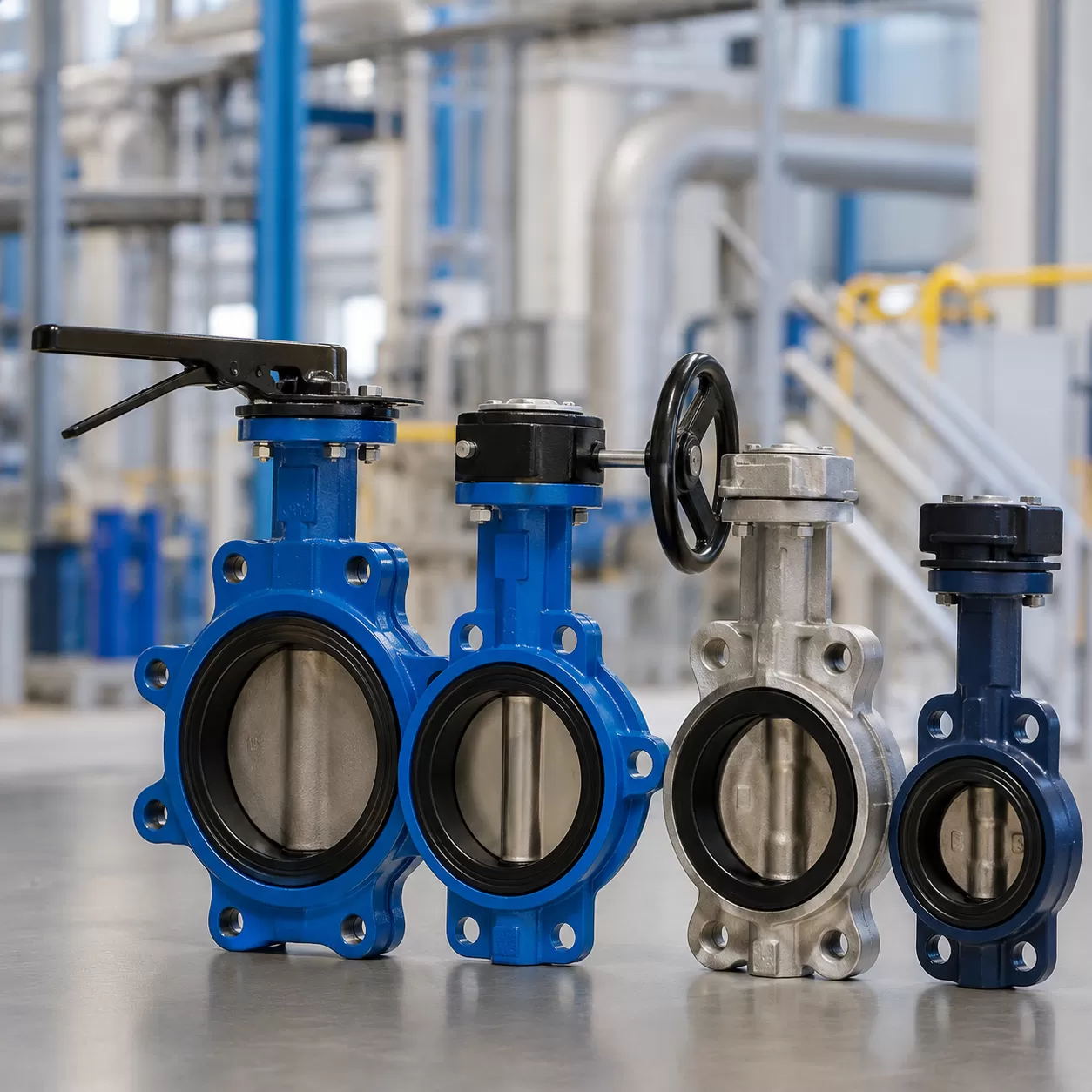
When choosing a butterfly valve for water treatment, the internal geometry makes all the difference in how the valve performs over time. The structural relationship between the stem, the disc, and the sealing seat dictates both the operating torque and the overall lifespan of the valve. In standard municipal and industrial water systems, design geometry generally falls into two primary categories: concentric and eccentric.
Concentric (Zero-Offset) Butterfly Valves: The Municipal Baseline
The concentric butterfly valve is the traditional workhorse for low-pressure municipal water supply pipelines. Also known as a resilient seated butterfly valve, this design features a shaft that passes directly through the centerline of both the disc and the valve body.
- The Sealing Mechanism: The edge of the disc rubs continuously against the soft EPDM rubber seat throughout its entire 90-degree rotation.
- Best Used For: Low-pressure, clean water distribution, and straightforward flow control automation setup.
- The Limitation: Because the disc is constantly in contact with the seat, these valves experience higher friction, which leads to seat wear and a shorter operational life in high-cycle or high-pressure environments.
The Mechanics of Eccentricity: Shifting the Axis to Reduce Wear
To overcome the friction issues inherent in zero-offset designs, engineers shift the axis of the valve shaft away from the centerline. This structural modification creates an eccentric, or offset, design.
By moving the stem behind the disc and slightly to one side, the valve achieves a cam-like operation. Instead of rubbing against the seal during the entire opening or closing cycle, the disc lifts cleanly away from the seat almost immediately upon opening.
- Operating Torque Reduction: Shifting the axis reduces the breakout torque required to open the valve, allowing for smaller, more cost-effective actuators.
- Extended Component Life: Minimizing seat friction significantly decreases wear and tear on the rubber elastomer, preventing premature seal failure.
- Application Versatility: This geometry allows the valve to handle higher pressure drops and more demanding flow conditions without compromising its bi-directional sealing capabilities.
Understanding this fundamental shift from concentric to eccentric geometry is essential before deciding whether to deploy a standard gate valve vs butterfly valve or moving up to high-performance offset configurations.
Deep Dive: High-Performance Double Eccentric Butterfly Valve
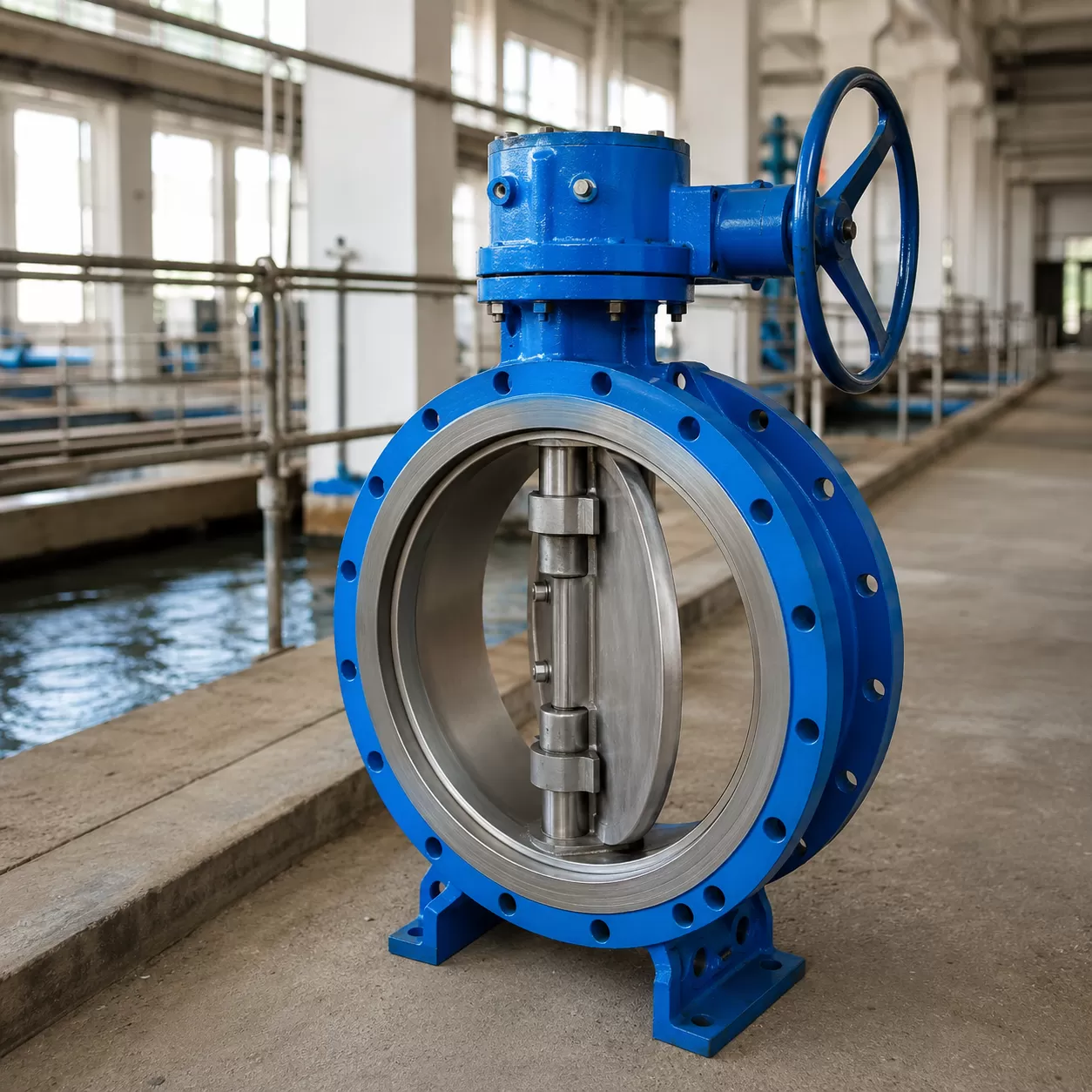
When standard valves can’t handle the pressure, a high performance butterfly valve utilizing a double eccentric design is the go-to solution. Unlike standard concentric options, this configuration alters the geometry to significantly reduce wear and extend service life in demanding environments.
Structural Anatomy: Understanding the Dual Offsets
The magic of the double eccentric butterfly valve lies in its shifted axes. We engineer these valves with two distinct offsets to optimize performance:
- Offset 1: The shaft is located behind the centerline of the sealing surface.
- Offset 2: The shaft is displaced to one side of the pipe’s center axis.
[ Pipe Centerline ]
|
(Shaft Offset 2) –> + | <– (Shaft Offset 1 Behind Disc)
| /
/ | [ Disc ]
The Cam Action Sealing Mechanism
This dual-offset geometry creates a cam action during operation. As the valve opens, the disc lifts immediately off the seat instead of scraping against it.
- Eliminating 90-Degree Seat Friction: Standard valves experience friction throughout their entire 90-degree rotation. The double eccentric design minimizes contact to the final few degrees of closure.
- Operating Torque Reduction: Less friction means you need less power to turn the valve, allowing for smaller, more cost-effective actuators.
Seat Material Profiles: Resilient vs. High-Performance
Choosing the right seat material determines the valve’s longevity and tight shutoff capabilities:
| Seat Material | Material Type | Best For | Key Advantage |
|---|---|---|---|
| EPDM Rubber Seat | Resilient | Municipal water, standard effluent | Excellent rebound, cost-effective |
| NBR | Resilient | Oily wastewater, hydrocarbons | Superior oil and abrasion resistance |
| PTFE | High-Performance | Mild chemicals, elevated temperatures | Low friction, high chemical resistance |
Ideal Water Treatment Applications
These heavy-duty valves are built for continuous duty cycles across various stages of water treatment. They are widely used in a typical wastewater treatment plant (WWTP) where raw sewage and grit cause rapid wear on lesser valves.
- Effluent Lines: Perfect for managing secondary and tertiary treated water flow.
- Intake Systems: Reliable isolation for raw water entering industrial water treatment plants.
- Filter Backwash: Handles high-cycle, turbulent flows without losing sealing integrity.
Zero-Leakage Triple Offset Butterfly Valves (TOV)
When your water treatment project demands more than just a standard seal, the triple offset butterfly valve is the ultimate heavy hitter. Unlike basic designs, the TOV is engineered for zero-leakage shutoff in environments where failure isn’t an option. At Norite, we focus on the “Triple Offset” geometry to ensure the disc only contacts the seat at the final point of closure.
The Science of the Third Offset
The “magic” happens with the right conical sealing geometry. By offsetting the shaft twice and then tilting the sealing cone axis, we eliminate friction throughout the entire stroke.
- Frictionless Operation: The disc rotates into the seat like a cam, preventing the rubbing that destroys standard rubber seals.
- Torque-Seated Tightness: The tighter you close it, the better it seals. This mechanical force creates a bubble-tight barrier against high pressure.
- Metal-to-Metal Hard Sealing: By utilizing a metal seat, these valves thrive in abrasive and corrosive media that would shred a resilient-seated valve in weeks.
Critical Water Treatment Applications
In the U.S. market, we specifically deploy these for the most demanding “problem areas” in a plant. If you are dealing with aggressive chemicals or extreme pressure, ensuring proper valve material selection for corrosion resistance is the first step toward a long-lasting installation.
- High-Pressure Desalination (SWRO): Handles high-chloride seawater without pitting or bypass.
- Corrosive Sludge & Grit: The metal-seated design resists the “sandpaper effect” of heavy solids in wastewater.
- High-Temperature Industrial Process Water: Maintains integrity when standard EPDM or NBR seals would melt or deform.
TOV Performance Matrix
| Feature | Triple Offset Benefit |
|---|---|
| Sealing Type | Bi-directional, Zero-leakage |
| Seat Material | Stellite or Stainless Steel (Metal-seated) |
| Cycle Life | Extremely High (Minimized wear) |
| Best For | High Pressure, Critical Isolation, Abrasive Slurry |
For modern facilities, the triple offset butterfly valve represents the peak of flow control, moving beyond simple municipal needs into high-stakes industrial and desalination infrastructure.
Comparative Selection Framework for Water Treatment Projects
Choosing the right butterfly valve for water treatment comes down to balancing system performance with project budgets. In US municipal and industrial water design, misspecifying a valve leads to immediate operational headaches. Under-engineering causes premature seat failure and frequent downtime, while over-engineering wastes valuable capital expenditure on capabilities the system does not require.
To prevent these costly design mistakes, we engineered a straightforward engineering framework based on real-world utility demands.
Norite Technical Matrix: Double Eccentric vs. Triple Offset
When evaluating a high performance butterfly valve versus a triple offset butterfly valve, matching the valve geometry to your exact process conditions is critical.
| Selection Criteria | Double Eccentric Butterfly Valve | Triple Offset Butterfly Valve (TOV) |
|---|---|---|
| Sealing Type | Resilient seated (EPDM rubber seat / NBR) or PTFE | Metal seated valves (Metal-to-metal hard sealing) |
| Sealing Performance | Bi-directional sealing with zero leakage at rated pressures | True zero leakage shutoff under extreme pressures/temperatures |
| Wear Mechanism | Cam action eliminates friction for most of the 90° stroke | Frictionless conical sealing geometry; contacts only at final closure |
| Operating Torque | Operating torque reduction compared to concentric types | Low torque, but requires precise torque-seated actuation |
| Typical US Applications | Wastewater treatment plant (WWTP) effluent, intake, filtration | High-pressure desalination (SWRO), corrosive sludge, steam |
| Pressure Drop | Low valve pressure drop across standard flow profiles | Minimal pressure drop, optimized for high-velocity systems |
Avoiding the Trap of Over-Engineering and Under-Engineering
In our work upgrading regional water infrastructure—similar to our distribution improvements for the Mambu Branco integrated water supply network expansion—we consistently see utilities over-specifying valve materials.
To maximize your return on investment, follow these hard engineering rules:
- Do Not Over-Engineer: A resilient seated butterfly valve utilizing a high-grade EPDM seat is the optimum, most cost-effective choice for standard municipal water supply pipelines and ambient industrial process water systems. Specifying a metal-seated triple offset valve here adds unnecessary cost without improving performance.
- Do Not Under-Engineer: For high-velocity throttling, abrasive slurry lines, or zero-tolerance desalination systems, standard concentric or double eccentric valves fail rapidly due to seat erosion. These severe services demand the ruggedness of a triple offset butterfly valve to handle the high friction and prevent catastrophic line drops.
Actuation and Automation in Smart Water Systems
Upgrading infrastructure means moving beyond manual labor to precise, automated flow control. While a manual gear operator works fine for isolation lines that rarely change, modern water systems require faster, smarter responses. Automated butterfly valves for water treatment are essential for protecting pipelines from water hammer and managing fluctuating flow rates in real-time.
Choosing the right actuation setup depends on your plant’s infrastructure and power availability:
- Pneumatic Actuators: Ideal for high-cycle wastewater treatment plant (WWTP) applications. They offer fast opening and closing speeds, high durability, and a natural fail-safe option using spring returns.
- Electric Actuators: The go-to choice for precise throttling and remote municipal water supply pipelines. They provide highly accurate positioning and integrate easily into facilities without existing compressed air lines.
Integrating with SCADA Control
Integrating these automated solutions into a centralized SCADA system allows for complete flow control automation. Modern electric and pneumatic actuators feed real-time data back to the control room, monitoring valve position, torque levels, and system pressure drops. This digital integration enables predictive maintenance, allowing operators to spot scaling or seat wear before a failure occurs. For complex infrastructure networks that utilize advanced flow management, pairing these automated butterfly units alongside specialty configurations like a fixed cone valve ensures optimal pressure regulation and reliable fluid control across the entire facility.
FAQs: Choosing the Right Butterfly Valve for Water Systems
How do I prevent seat wear in high-cycle water applications?
To maximize the lifespan of your resilient seated butterfly valve, switch from a standard concentric design to a double eccentric butterfly valve. The dual-offset geometry lifts the disc off the seat immediately upon opening, minimizing friction and rubbing. For automated, high-frequency systems, choosing a disc with polished edges and ensuring proper actuator calibration will also prevent premature seat degradation.
Can wafer valves be used for end-of-line service?
No, a standard wafer butterfly valve should not be used for dead-end or end-of-line service. Because wafer bodies are sandwiched between two pipe flanges using long through-bolts, removing the downstream piping leaves the valve completely unsecured. If your system requires end-of-line isolation for downstream maintenance, you must specify a flanged butterfly valve or a lug-style valve that bolts directly to the individual flange. You can explore our comprehensive breakdown of structural variations in our guide on butterfly valve types.
What makes a triple offset valve better for desalination than a concentric type?
Seawater Reverse Osmosis (SWRO) desalination demands strict corrosion resistance and high-pressure capabilities. A standard concentric valve relies on soft rubber seats that degrade rapidly under high pressures and abrasive salt particulates. A triple offset butterfly valve utilizes a unique conical sealing geometry and metal-to-metal hard sealing. This ensures a zero leakage shutoff without seat deformation, even when handling highly corrosive brine and high-velocity flows.
When should I choose EPDM over NBR for municipal water?
Select EPDM rubber seats for standard municipal water supply pipelines, environmental water treatment, and applications involving elevated temperatures or chloramine treatments. EPDM offers superior resistance to aging, ozone, and water treatment chemicals. Opt for NBR (Nitrile) only if the water stream contains trace oils, hydrocarbons, or fats, as EPDM will swell and fail when exposed to petroleum-based fluids.






