

Classifying Butterfly Valve Leakage: Internal vs. External
When we deal with fluid control systems, a leaking valve isn’t just a maintenance headache—it’s a threat to operational safety and efficiency. To solve a butterfly valve sealing problem, we first need to isolate where the fluid is escaping. In municipal and industrial pipeline systems, choosing a reliable water valve manufacturer can also reduce the risk of repeated sealing failures from the design stage. We classify butterfly valve leakage into two primary categories: internal and external. Pinpointing the location immediately narrows down the root cause and dictates the repair strategy.
Internal Leakage (Seat & Disc Failure)
Internal valve leakage occurs when the media flows past the disc even though the valve is fully closed. This indicates a bubble-tight shutoff failure where the seal between the moving disc and the stationary seat has compromised integrity.
- Primary Drivers: This issue typically stems from butterfly valve seat leakage or direct valve disc damage.
- Common Symptoms: Downstream pressure creep, fluid contamination, and inability to isolate system segments during maintenance.
- Key Vulnerabilities: In concentric vs. eccentric butterfly valves, the soft elastomer seats of concentric designs are highly susceptible to friction wear, while eccentric designs can suffer from seal geometric shifts.
External Leakage (Stem & Flange Failure)
External media leakage occurs when the process fluid escapes the pressure boundary of the valve into the surrounding environment. This poses severe safety risks, especially when handling hazardous or high-temperature materials.
- Primary Drivers: This is almost always caused by stem packing wear or failures at the pipe joint connection.
- Common Symptoms: Visible pooling around the valve neck, hissing sounds in gas applications, and external corrosion on the valve body.
- Key Vulnerabilities: Continuous cycling degrades the stem seals over time, while flange misalignment during installation creates uneven gasket compression, forcing a path for external leaks.
Core Causes of Internal Butterfly Valve Leakage
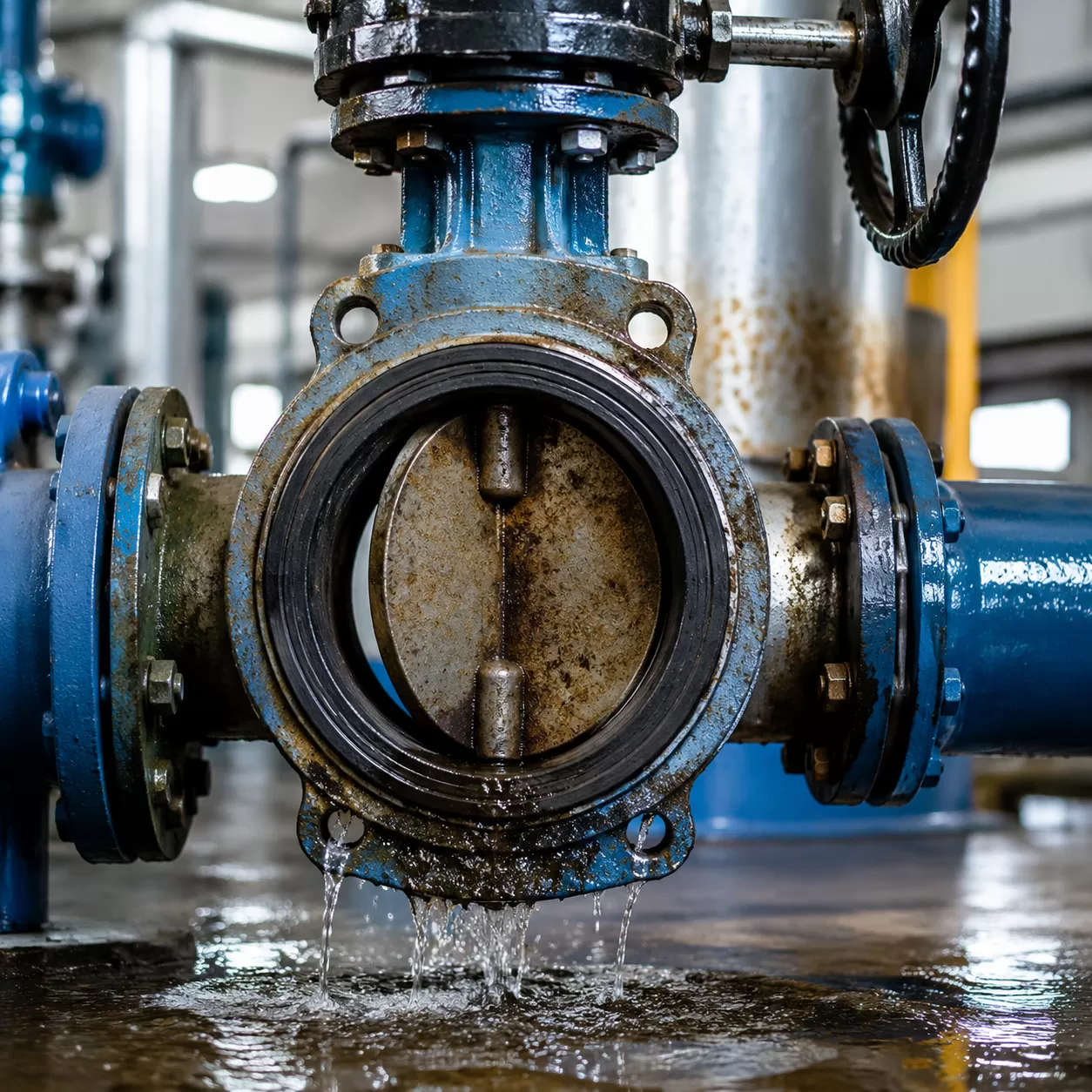
Internal butterfly valve leakage—often resulting in a complete bubble-tight shutoff failure—happens when the internal sealing components lose their integrity. When fluid or gas slips past the disc, it usually comes down to one of four common issues in the pipeline.
Elastomer and Soft Seat Degradation
Soft seats made of EPDM, Buna-N, or Viton handle a lot of heavy lifting in standard applications. However, compatibility issues cause major butterfly valve seat leakage. If the media temperature spikes beyond the material’s limit, or if harsh chemicals attack the polymer, the elastomer seat degradation begins. The material hardens, cracks, or swells, preventing the valve disc from making a clean, tight seal. For severe service valve leakage protection, switching to high-performance PTFE or metal seats is required. In water treatment projects, a properly selected butterfly valve for water treatment can help balance sealing performance, corrosion resistance, and long-term service life.
Mechanical Wear and Scored Sealing Surfaces
Every time a butterfly valve cycles, the disc rubs against the seat. Over thousands of cycles, this friction creates natural mechanical wear. If the line handles abrasive slurries, the problem accelerates, leading to visible valve disc damage and scored sealing surfaces. Once the smooth profile of either the disc edge or the seat is compromised, media will find the microscopic gaps and weep through.
Pipeline Debris Entrapment
One of the most common butterfly valve sealing problems in new setups or heavily fouled lines is debris entrapment. Welding slag, rust scale, pipe tape, and stones can easily get caught between the disc and the seat during closure. When the actuator forces the valve shut against these hard particles, it permanently gouges the soft seat or dents the disc edge, causing immediate and permanent internal valve leakage.
Actuator and Limit Switch Misalignment
Sometimes the valve components are perfectly fine, but the automation is off. Proper actuator limit switch adjustment is critical. If the limit switches on an electric or pneumatic actuator are set incorrectly, the actuator may stop turning before the disc fully reaches the center of the seat. Even a fraction of a degree off-center leaves a gap wide enough to cause noticeable valve disc leakage under pressure.
Core Causes of External Butterfly Valve Leakage
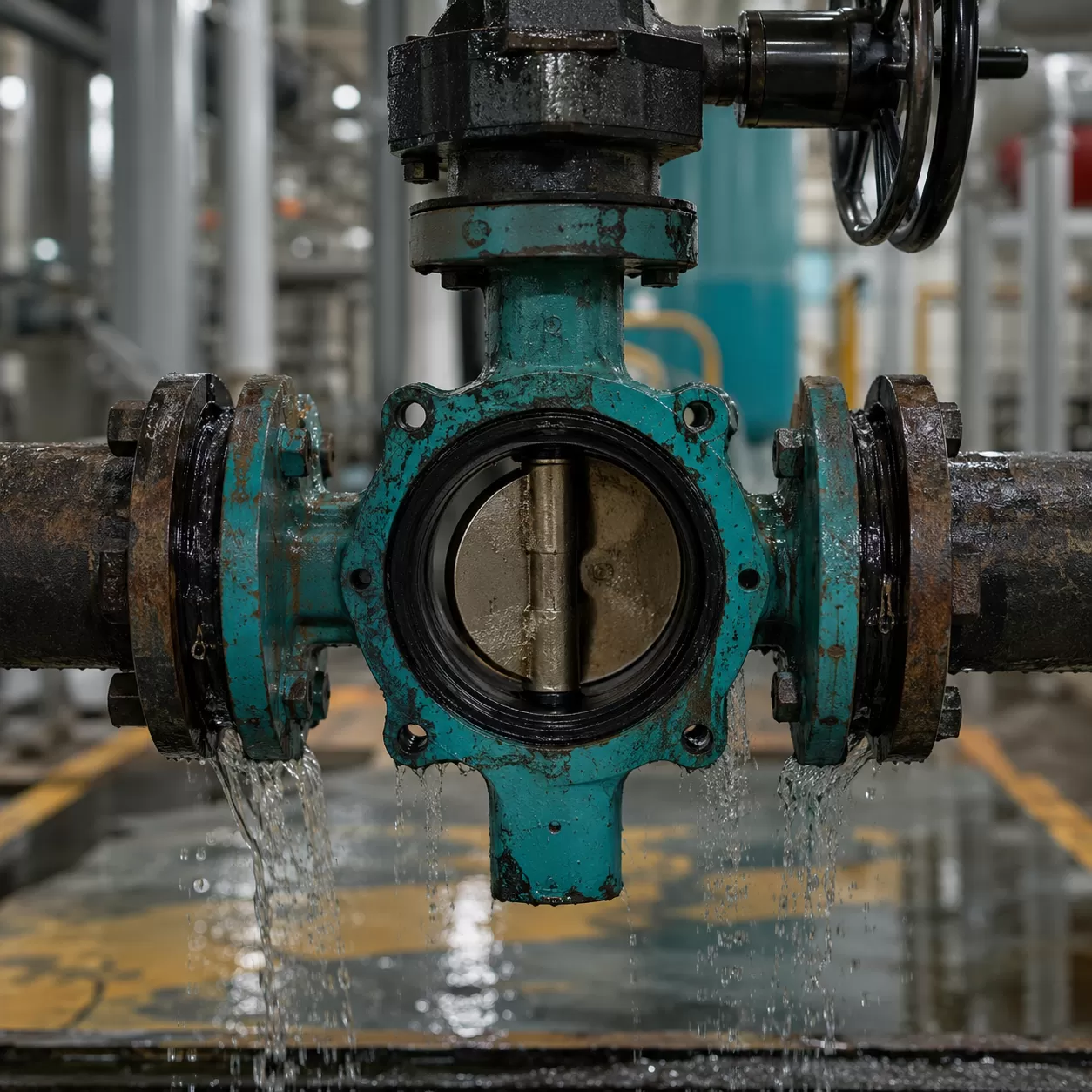
When dealing with a butterfly valve sealing problem, the issue isn’t always hidden inside the pipe. External media leakage can escape directly into your facility, creating safety hazards and costly product loss. This type of butterfly valve leakage typically points to two main culprits outside the flow stream.
Stem Packing and O-Ring Failure
The valve stem is a constant moving part, making it a prime target for stem packing wear. Over time, friction and pressure cycle degradation compromise the seals designed to keep the media contained.
- Friction and Wear: Continuous rotation scores the packing material, creating microscopic paths for fluid to escape.
- Pressure Spikes: Standard elastomers degrade faster when subjected to system pressures beyond their rating, leading to premature blowout.
- Material Hardening: High operating temperatures bake the O-rings, causing them to lose the flexibility required to maintain a tight seal around the moving stem.
Flange Connection and Installation Errors
A significant portion of external butterfly valve seat leakage and outer weeping actually stems from poor installation practices rather than a manufacturing defect. If the valve isn’t perfectly aligned within the piping network, the joint is compromised from day one. For flanged pipeline layouts, selecting a suitable flanged butterfly valve and matching it with the correct gasket and bolt torque can greatly reduce installation-related leakage.
- Flange Misalignment: Piping that is uneven or improperly supported puts uneven mechanical stress on the valve body, distorting the external seal faces.
- Uneven Bolt Torque: Fastening flange bolts without a calibrated torque wrench creates high- and low-pressure spots across the gasket surface, inviting leaks.
- Mismatched Gaskets: Using the wrong gasket material or thickness for your specific flange type prevents the joint from sealing flush against the valve body.
Technical Diagnostics: Butterfly Valve Leakage Troubleshooting Matrix
When you’re out in the field dealing with a butterfly valve sealing problem, you need to pinpoint the issue fast to minimize downtime. Whether you are dealing with severe service valve leakage or a standard line failure, using a structured diagnostic approach saves time and prevents catastrophic equipment damage.
The reference table below outlines the exact symptoms of butterfly valve seat leakage and external media leakage, their root causes, and the immediate corrective actions you need to take.
| Leakage Type | Observed Symptom | Likely Root Cause | Immediate Field Action |
|---|---|---|---|
| Internal Leakage | Fluid bypasses the disc when fully closed (Bubble-tight shutoff failure) | • Elastomer seat degradation from chemical mismatch • Actuator limit switch adjustment is off • Line debris trapping the disc open | • Check and recalibrate actuator closed-position limits. • Flush the line to clear debris. • Inspect disc edges for erosion or deep scoring. |
| Internal Leakage | Gradual increase in downstream pressure | • Normal valve disc damage or wear • High-velocity media eroding the soft seat | • Schedule a seat replacement. • Verify line pressure against valve torque specifications. |
| External Leakage | Media weeping or spraying from the top of the valve neck | • Stem packing wear or torn O-rings • High cycle rates degrading the stem seal | • Tighten the packing gland nuts evenly (do not over-torque). • Replace stem packing kit if wear is severe. |
| External Leakage | Fluid leaking from the pipe joint area | • Flange misalignment during installation • Damaged or unevenly torqued flange gaskets | • Loosen bolts, realign the pipe flange, and cross-torque to spec. • Replace damaged flange gaskets. |
Field Diagnostics Checklist
- Check the Actuator First: A huge percentage of internal valve leakage is simply a limit switch that drifted. Always verify the physical disc position before pulling a valve offline.
- Isolate and Depressurize: Before tightening packing glands or adjusting flange bolts to fix external leaks, ensure the line segment is safely isolated.
- Identify the Valve Style: Remember that concentric vs. eccentric butterfly valves handle seat wear differently; high-performance eccentric designs may require specific torque adjustments to restore a tight seal.
Preventing Butterfly Valve Leakage: Engineering-Backed Solutions
Stopping a butterfly valve sealing problem before it starts comes down to smart engineering and proper field habits. If you want to avoid internal valve leakage and unexpected downtime, you have to match the valve to your specific environment and install it right the first time. For compact pipeline systems, a wafer butterfly valve is often selected for easier installation, lighter weight, and reliable shutoff in standard water applications.
Here is how we keep systems leak-free.
Precision Material Selection for Working Conditions
One size does not fit all. Choosing the wrong material is a fast track to elastomer seat degradation and premature failure.
- Standard Applications: For basic water and non-corrosive media at normal temperatures, standard concentric butterfly valves with EPDM or NBR seats work perfectly.
- High-Temperature & Severe Service: For harsh chemical processing or extreme temperatures, look toward concentric vs. eccentric butterfly valves. Double or triple eccentric designs (high-performance butterfly valves) utilize metal seats or specialized PTFE to prevent severe service valve leakage.
- Media Compatibility: Ensure your line media won’t chemically attack the seat. Corrosive fluids require upgraded disc materials to prevent valve disc damage that destroys the sealing boundary.
Proper Installation Protocols
A perfectly manufactured valve will still fail if it is forced into a poorly aligned pipe.
- Check Flange Alignment: Flange misalignment puts uneven stress on the valve body and seat. Ensure piping is straight, centered, and properly supported before tightening any bolts.
- Leave the Disc Cracked Open: Always keep the valve disc slightly open during installation. If the valve is fully closed, the flange faces can pinch the elastomer seat, causing immediate butterfly valve seat leakage upon startup.
- Cross-Torque Flange Bolts: Tighten flange bolts in a star pattern using a torque wrench. Even pressure prevents gasket deformation and eliminates external media leakage around the flanges.
Actuator Torque Optimization
An improperly calibrated actuator is a leading cause of bubble-tight shutoff failure.
- Follow Valve Torque Specifications: Operators must set actuator torque outputs based on the manufacturer’s exact limits. Too little torque fails to seal the disc against the seat; too much torque crushes the elastomer, leading to rapid stem packing wear and seat deformation.
- Precise Actuator Limit Switch Adjustment: Set the open and close limit switches perfectly. If the actuator stops turning even a fraction of a degree before the disc is fully seated, you will deal with chronic butterfly valve leakage.
Proactive Maintenance Protocols for Zero-Leakage Systems
To achieve a true bubble-tight shutoff, reactive maintenance isn’t enough. You need a structured approach to catch butterfly valve seat leakage before it shuts down your line. By staying ahead of elastomer seat degradation and stem packing wear, you can drastically extend the lifespan of your equipment.
Industrial Valve Maintenance Checklist
Implementing a routine industrial valve maintenance checklist is the easiest way to prevent internal valve leakage and external media leakage. In wastewater systems, where solids, sludge, and corrosive media are common, understanding the main valves used in wastewater treatment plants can also help maintenance teams choose the right valve type for each process section.
- Quarterly Operational Flushes: Cycle the valve to clear out pipeline debris that causes valve disc damage.
- Stem and Packing Inspections: Check around the actuator mounting for early signs of stem packing wear. Tighten the packing gland if needed, but do not over-torque.
- Actuator Limit Switch Audit: Verify that the actuator limit switch adjustment aligns perfectly with the fully closed position of the disc.
- Visual Integrity Checks: Look for external signs of flange misalignment or bolted joint relaxation caused by thermal cycling.
FAQs on Butterfly Valve Leakage and Prevention
Why does a butterfly valve sealing problem happen right after installation?
This is usually caused by flange misalignment or over-tightening the bolts, which distorts the elastomer seat. It can also happen if the actuator limit switch adjustment was not calibrated correctly before line pressure was applied.
How do concentric vs. eccentric butterfly valves compare regarding seat wear?
Concentric valves rely on continuous friction between the disc and the seat, making them more prone to elastomer seat degradation over time. Concentric vs. eccentric butterfly valves differ because double or triple eccentric designs lift the disc off the seat almost immediately upon opening, drastically reducing wear and butterfly valve leakage in high-cycle or high-pressure systems.
What is the primary cause of severe service valve leakage?
In harsh environments, severe service valve leakage typically stems from material incompatibility—such as using standard rubber where high-temperature or abrasive chemicals are present—or chronic valve disc leakage caused by high-velocity media eroding the sealing edges. Moving to Norite high-performance butterfly valves or choosing exact valve torque specifications can prevent these failures.






