
Flap Gate Selection for Stormwater Outfalls: Opening Head, Backwater and Mounting

Select a flap gate for a stormwater outfall by the available opening head, required discharge flow, maximum reverse head and mounting conditions. Include maintenance access in the specification. The pipe diameter establishes the connection size, but the hydraulic conditions determine whether the gate suits the duty. A passive flap gate opens when the outward hydraulic […]
Stormwater Pump Station Equipment Checklist: Pumps, Screens, Gates and Outfall Protection

A stormwater pump station equipment list should cover intake screening, maintenance isolation, pumping, discharge and backflow protection, installation accessories, and the power and controls needed to operate them. Build the list from the approved hydraulic arrangement: equipment quantities, connections, and supply responsibilities vary by station. A list of pump models alone is not a complete […]
Axial Flow vs Mixed Flow Pumps for Stormwater Stations: How to Select by Duty Point
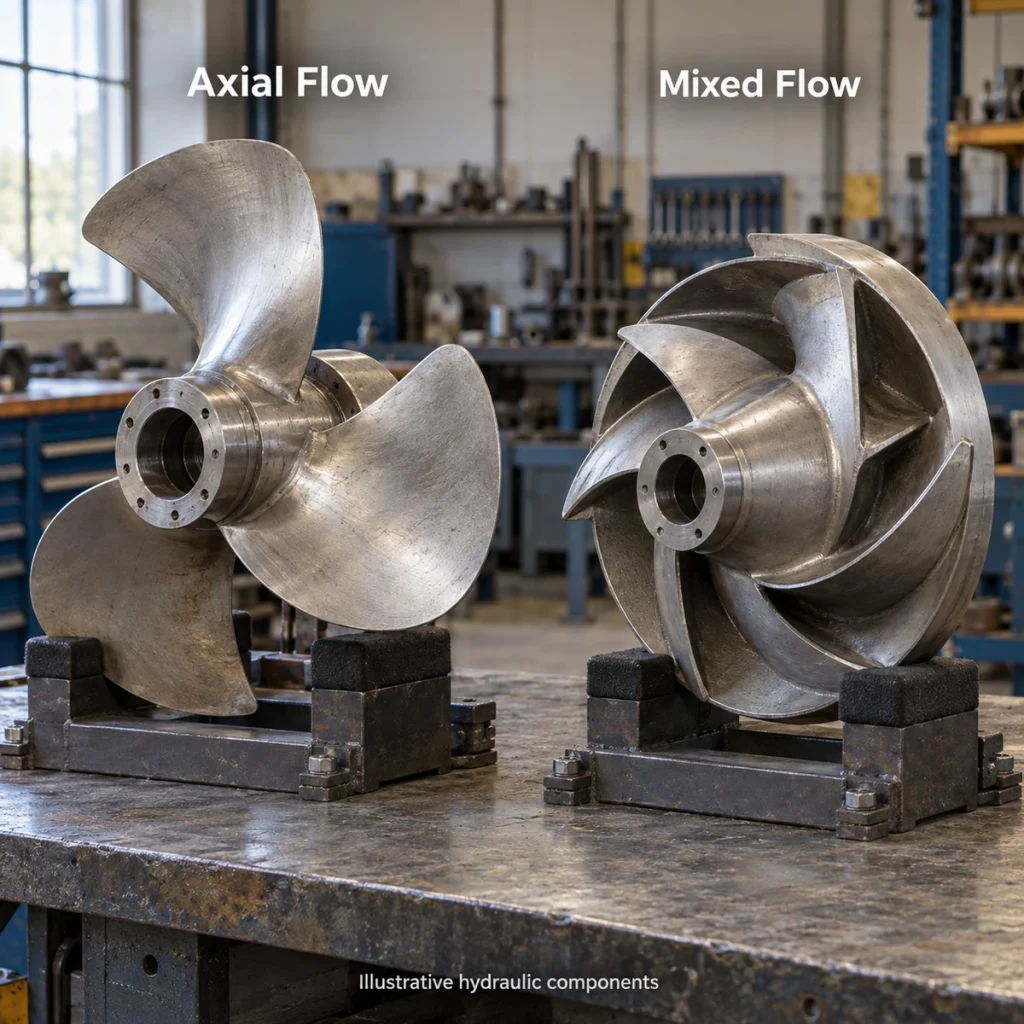
An axial flow pump is often a candidate for moving large volumes of stormwater at low head. A mixed flow pump can be a candidate when substantial flow must be delivered at a higher head. The final choice depends on the specific pump curve, the station’s operating range, intake conditions, and debris characteristics—not a universal […]
Butterfly Valves for Data Center Chilled Water: Isolation Valve Selection and RFQ Checklist

A butterfly valve can be a practical isolation valve on a data center chilled-water header, equipment connection, or distribution branch when its size, pressure rating, end connection, seat, shutoff duty, and actuator are checked against the actual piping design. Start with the valve’s job: which section must remain operational when a chiller, pump, heat exchanger, […]
Automatic Bar Screen Cleaner for Wastewater Inlet Works: Structure, Selection, and Maintenance

An automatic bar screen cleaner intercepts debris in a wastewater inlet channel and mechanically lifts the collected screenings to a discharge point. For a chain-driven rotary bar screen, circulating rakes clean the screening area and carry solids out of the flow. Select the equipment by peak flow, channel geometry, clear opening, allowable upstream water level, […]
Submersible Sewage Pump Impeller Types: Channel, Vortex, Cutter, and High-Lift Selection

Quick answer: The main submersible sewage pump impeller choices are channel, vortex and cutting designs. A channel impeller moves wastewater through one or more defined passages and is often a starting point for ordinary sewage when the solids and fibers are manageable. A recessed vortex impeller leaves a more open passage for irregular debris, but […]
Data Center Cooling Valves: Selection Guide for Chilled Water, Condenser Water and CDU Facility Loops

Data center cooling valves should be selected by their job in the piping system, not by a single list of valve types. A chilled-water header may need reliable isolation; a CRAH coil needs stable flow control; a pump discharge may require backflow protection; and a CDU facility-water connection may need isolation, filtration and control matched […]
Non-Clog Sewage Pump vs Cutter Pump vs Grinder Pump: Which Handles Rags and Fibers Better?

When comparing a non-clog sewage pump vs cutter pump for rags and fibers, shortlist a cutter or a proven anti-ragging non-clog design when wrapping repeatedly causes blockages. Consider a grinder when the discharge system also requires solids reduction, particularly in a small-diameter pressure sewer. A conventional non-clog pump remains suitable where the actual solids pass […]
How to Select Valves for Sludge by Solids Content: Low, Medium, and High-Solids Wastewater

Sludge valve selection by solids content starts with the measured solids concentration, then checks what those solids contain and how the line operates. Screened, dilute sludge may suit an approved resilient seated gate valve. Fibrous or thickened sludge calls for a closer review of full-port knife gate, pinch, or eccentric plug designs. Abrasive grit, flow […]
Sludge Gate Valve vs Knife Gate Valve: Which Handles Thick Sludge, Ragging, and Grit Better?

The sludge gate valve vs knife gate valve comparison depends on sludge consistency, fibrous debris, abrasive grit, and the required shutoff duty. For thick, fibrous sludge, a knife gate valve designed for the actual duty is usually a stronger starting point than a conventional water-service wedge gate valve. For screened, relatively dilute wastewater, a suitable […]