
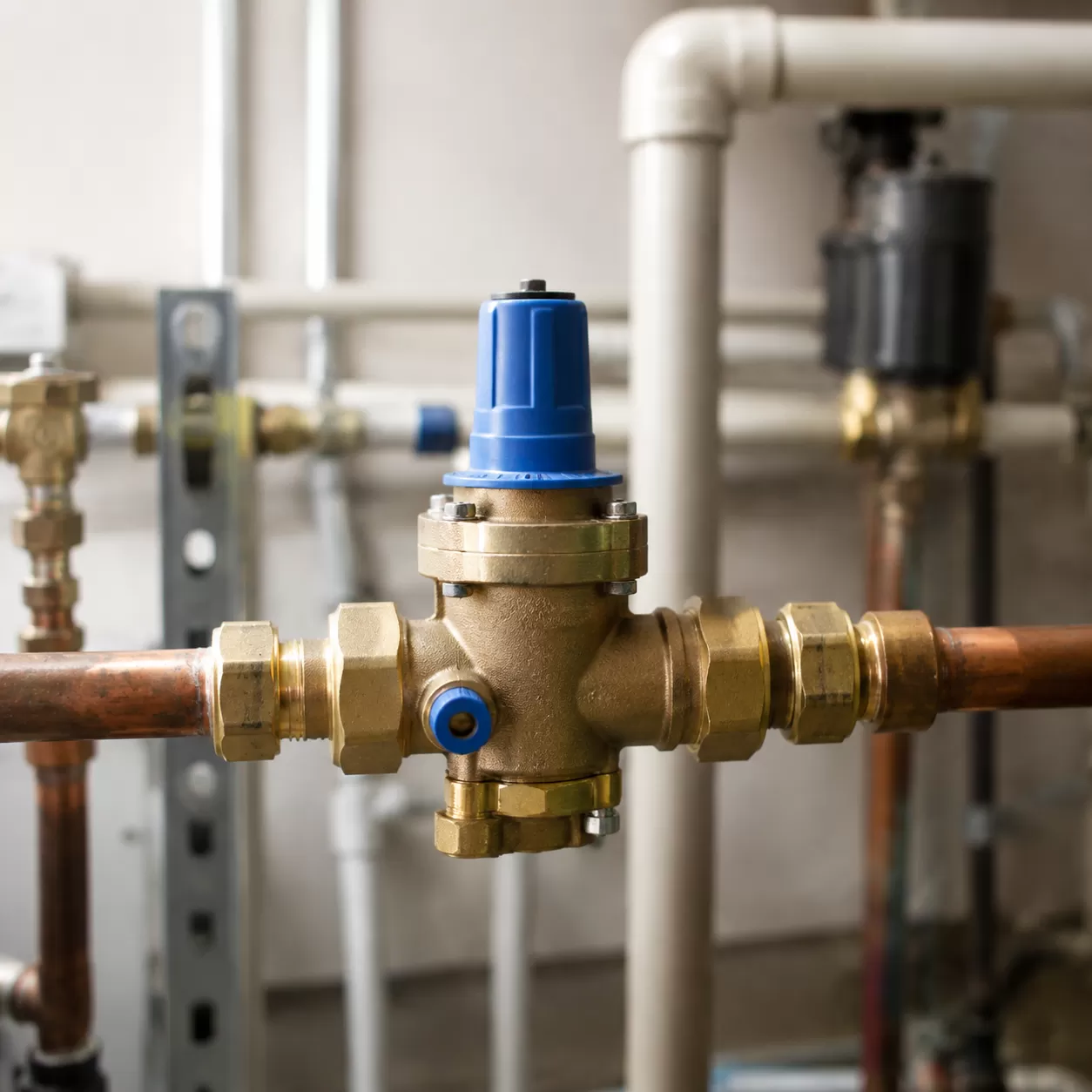
What is a Pressure Reducing Valve (PRV) and How Does It Work?
High municipal water pressure can completely wreck your plumbing system. A pressure reducing valve (PRV) is a specialized control valve installed at the main water service line to automatically downshift high, fluctuating incoming municipal water pressure into a safe, functional, and consistent level. Without a PRV water system in place, your pipes, joints, and appliances are under constant stress from water surges.
Core Mechanical Components of a PRV
A standard water pressure regulator relies on a few heavy-duty components working in unison:
- The Valve Body: The outer shell that houses the internal parts, typically cast in heavy brass or dezincification-resistant brass for durability.
- The Spring: The mechanical heart that dictates the pressure set point. Tightening the adjustment screw compresses this spring to increase downstream pressure.
- The Diaphragm: A flexible rubber membrane that reacts to the downstream water pressure, balancing against the spring force.
- The Disc and Seat: The internal throttling mechanism that opens or closes to restrict or permit water flow.
[Image of pressure reducing valve cross section diagram]
The Physics of Pressure Regulation
The core mechanism operates on a simple balance of forces: Spring Force vs. Downstream Pressure.
When water is not being used, downstream pressure builds up beneath the diaphragm. This pressure pushes upward against the spring, forcing the diaphragm up and causing the valve disc to close tightly against the seat. This stops the flow and maintains the set pressure.
When a faucet opens downstream, the pressure drops. The spring now pushes the diaphragm back down, opening the valve disc to let water pass through. The valve continuously self-adjusts to maintain a steady downstream pressure gauge reading, regardless of how wildly the incoming city pressure spikes.
PRV vs. Pressure Relief Valve: What Is the Difference?
While they sound identical, a pressure control valve for reduction serves an entirely different purpose than a relief valve. Mixing them up can ruin your system design.
| Feature | Pressure Reducing Valve (PRV) | Pressure Relief Valve |
|---|---|---|
| Primary Function | Constantly regulates and lowers incoming pressure to a set limit. | Opens fully to dump water and relieve extreme over-pressure emergencies. |
| Operation Mode | Normally open; continuously throttling the flow. | Normally closed; only opens during dangerous pressure spikes. |
| Installation Point | Main water supply line entering the building. | Water heaters, boilers, and closed-loop systems. |
| Discharge | Keeps all water inside the pipe network. | Discharges water externally onto the floor or into a drain. |
Key Benefits of Installing a PRV in Water Pipelines
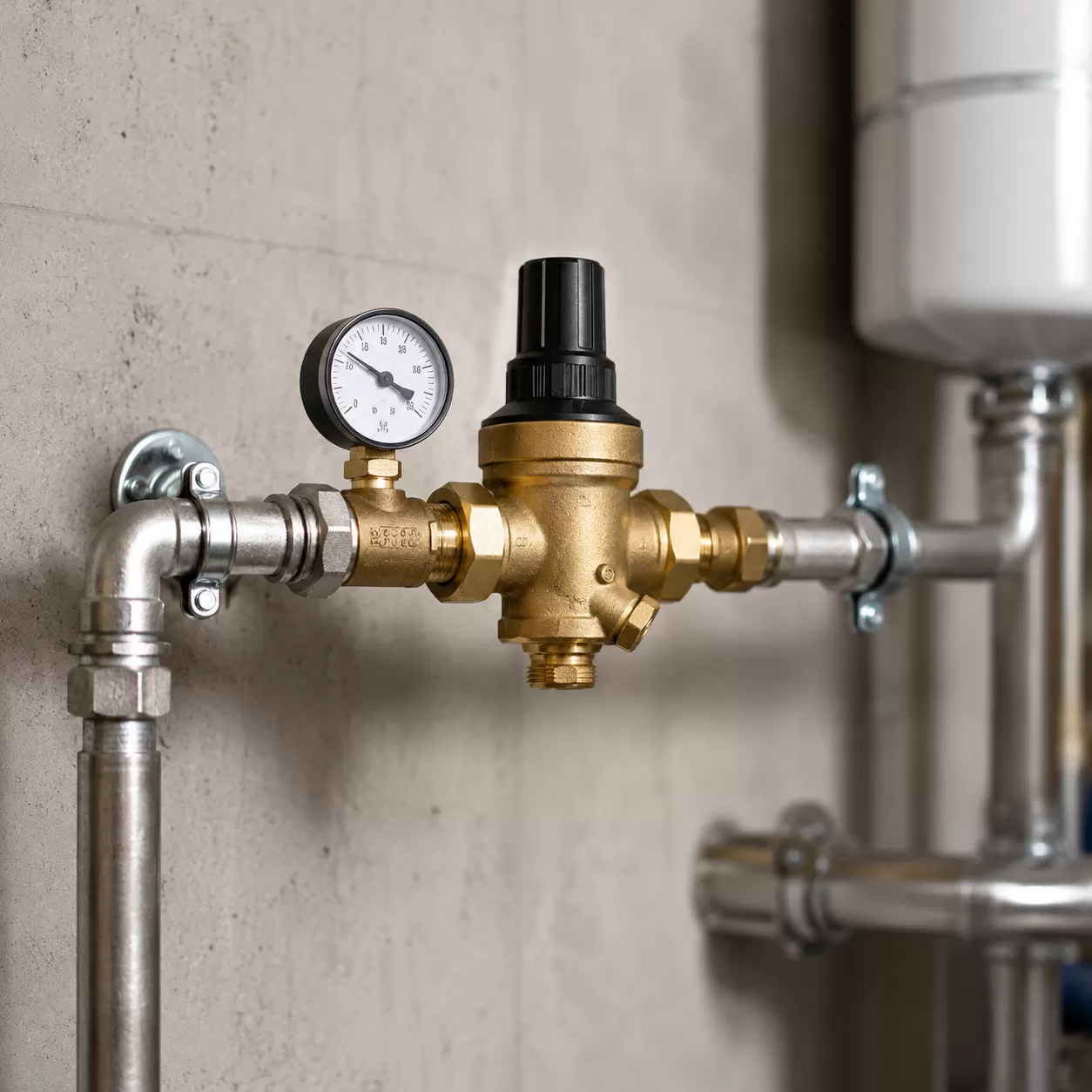
High incoming municipal water pressure can quietly wreck a building’s plumbing system. Installing a heavy-duty pressure reducing valve (PRV) acts as a structural shield, ensuring stable, manageable pressure throughout the facility. Managing this pressure properly provides several distinct advantages for property owners and system engineers.
Infrastructure Longevity and Appliance Protection
Consistently high water pressure damages pipes, joints, and expensive equipment. When a PRV water system is calibrated correctly, it provides critical plumbing fixture protection by lowering the stress on internal components.
[High Municipal Pressure] —> [ PRV ] —> [ Safe, Controlled Downstream Pressure ]
|—> Protects Water Heaters
|—> Safeguards Appliances
|—> Preserves Pipe Joints
- Extended Appliance Lifespan: Protects washing machines, dishwashers, and water heaters from premature internal seal failures.
- Reduced Pipe Fatigue: Keeps downstream pressure within a safe 50–60 PSI range, preventing fitting leaks and costly burst pipes.
- Lower Maintenance Costs: Fewer emergency plumbing calls and lower overall repair expenses for the facility.
Eliminating Noisy Plumbing and Water Hammer
High-velocity water flow creates annoying structural noise and destructive physical shockwaves. A properly tuned pressure control valve calms the entire system, preventing common acoustic and mechanical issues. In larger pipeline systems, correct valve selection should also consider water hammer risk, especially when pressure control is paired with check valves or air release devices.
- Stopping Water Hammer: Eliminates the violent shockwaves caused by fast-closing valves, which can crack pipes over time.
- Quieter Operation: Ends the whistling, banging, and vibration inside walls when faucets or valves open.
- System Stabilization: Keeps line velocities low to ensure smooth, quiet fluid dynamics.
Resource, Financial, and Environmental Savings
Lowering system pressure reduces water consumption and protects the environment. Delivering water at standard pressures prevents unnecessary waste at every tap and fixture.
| Benefit Category | Impact of Pressure Control | Real-World Financial & Resource Result |
|---|---|---|
| Water Conservation | Lowers the volume of water pushed through open faucets and showers. | Drops monthly water and sewer utility bills significantly. |
| Energy Reduction | Less water used means less water to heat. | Cuts down on energy bills for commercial boiler and water heater systems. |
| Leak Mitigation | Reduces the flow rate of existing hidden background leaks. | Prevents minor pipe weeping from turning into catastrophic flooding events. |
| Eco-Sustainability | Minimizes overall community water extraction and treatment demands. | Helps commercial facilities meet local green building certifications. |
Integrating a reliable water pressure regulator reduces maintenance costs, lowers utility bills, and protects the building’s physical infrastructure. For a complete look at optimizing utility networks, tracking your baseline resource usage with a high-quality mechanical water meter helps maximize these financial and environmental savings.
Types of Pressure Reducing Valves in Water Supply Systems
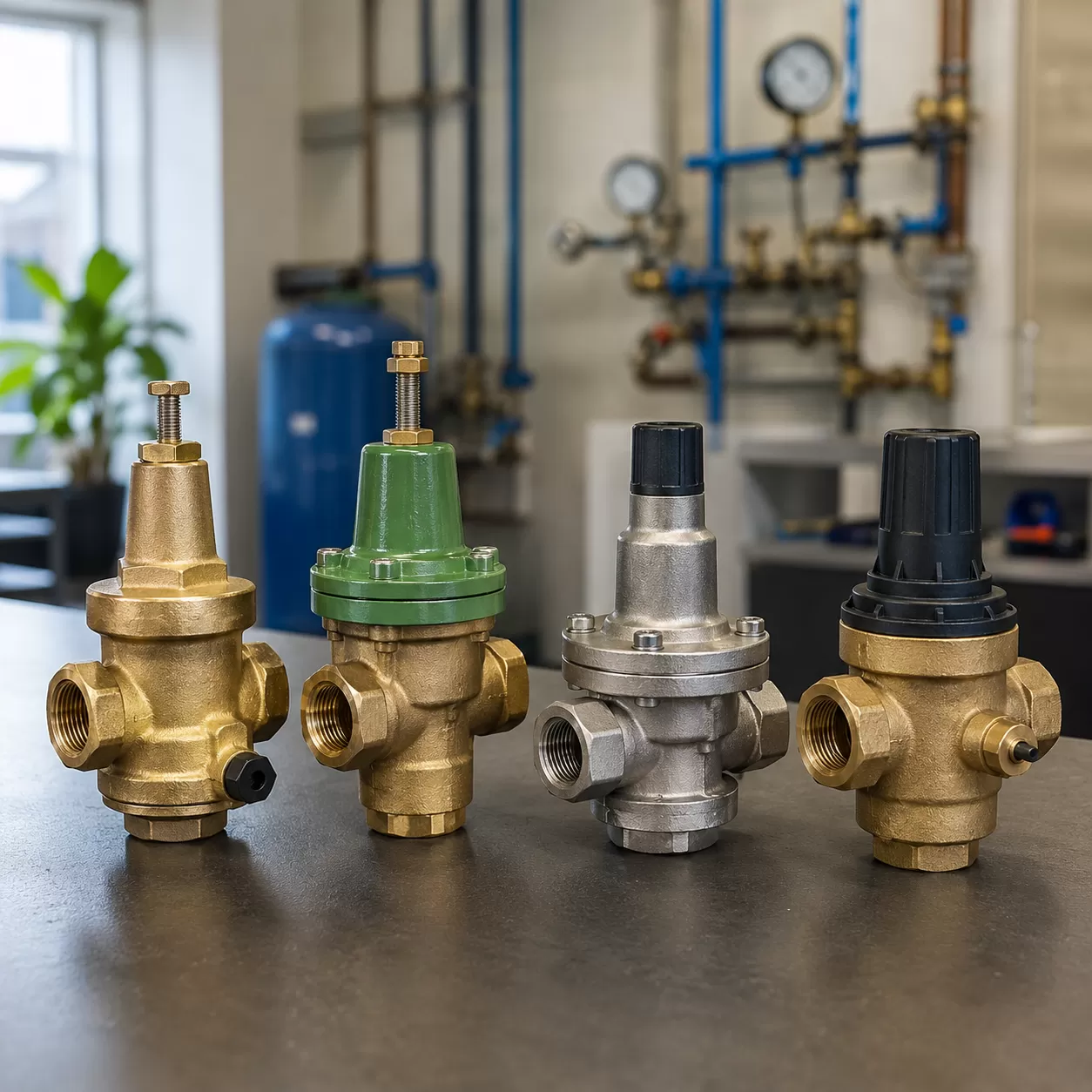
Choosing the right pressure reducing valve (PRV) comes down to understanding your specific system demands. In municipal and commercial water networks, we generally categorize these regulators into two primary types based on how they handle flow and pressure changes.
Direct-Acting PRVs for Standard Systems
For most standard residential applications and smaller commercial buildings, a direct-acting valve is the go-to choice. These units feature a straightforward design where a spring-loaded diaphragm connects directly to the internal valve stem.
- How they work: When downstream pressure drops, the spring forces the valve open to restore the set pressure.
- Best use cases: Ideal for low-to-moderate flow rates where tight pressure control isn’t overly critical.
- Pros and cons: They are highly reliable, economical, and easy to maintain. However, they are susceptible to “flow droop,” meaning downstream pressure can fluctuate slightly as flow rates spike.
Pilot-Operated PRVs for High-Capacity Networks
When dealing with massive water volumes, fluctuating inlet pressures, or critical municipal lines—such as a large-scale integrated water supply network expansion—a pilot-operated PRV is required for precise water pressure regulation.
- How they work: Instead of relying solely on a main spring, these valves utilize a smaller, highly sensitive secondary valve, the pilot, to modulate the main diaphragm. The pilot senses minor downstream changes and uses the inlet water pressure itself to open or close the main valve.
- Best use cases: Engineered for high-capacity networks, municipal grid main lines, and high-rise commercial structures.
- Pros and cons: They deliver exceptionally tight pressure control and maintain a stable downstream set point regardless of massive flow variations. They do, however, require a cleaner water supply and more frequent maintenance of the pilot lines to prevent clogging.
Engineering Selection: How to Choose and Size the Right PRV
Choosing the right pressure reducing valve (PRV) determines whether a water distribution network functions smoothly or suffers from constant pipe bursts and pressure fluctuations. Proper engineering selection ensures long-term system stability and protects downstream plumbing infrastructure.
The Golden Rule: Never Size by Pipe Line Diameter Alone
The most common mistake in plumbing design is matching the PRV size directly to the existing pipe line diameter. An oversized valve operates too close to its seat, causing whistling noises, chattering, and rapid cavitation damage. Conversely, an undersized valve creates massive pressure drops and restricts necessary flow during peak demand. Always size the valve based on calculated flow rates, not the size of the pipe.
Critical Technical Parameters to Calculate
To select the perfect water pressure regulator for your pipeline, calculate these key parameters before purchasing:
| Parameter | Description | Impact on Selection |
|---|---|---|
| Design Flow Rate (GPM) | The minimum, continuous, and peak water demand of the building. | Determines the physical valve size required to handle flow without choking. |
| Inlet Pressure ($P_1$) | The maximum incoming municipal water pressure from the city main. | Dictates the pressure rating, such as Class 150 vs. Class 300, of the valve body. |
| Outlet Pressure ($P_2$) | The desired safe downstream pressure for the building fixtures. | Determines the specific spring range needed for accurate regulation. |
| Max Pressure Reduction Ratio | The ratio of inlet pressure to outlet pressure ($P_1 : P_2$). | If the ratio exceeds $3:1$, a two-stage PRV system is required to avoid cavitation. |
Material Compatibility for Hard Water Environments
For municipal systems dealing with hard water or aggressive chemical compositions, material selection is critical. Standard brass components can suffer from dezincification, leading to premature structural failure.
- Dezincification-Resistant (DZR) Brass or Bronze: Best for commercial and residential standard systems to prevent mineral corrosion.
- Ductile Iron with Epoxy Coating: The industry standard for main municipal lines and high-capacity networks.
- Stainless Steel Trim: Highly recommended for internal pilots, seats, and stems to resist wire-drawing and scale buildup.
Piping Design and Installation Considerations
A proper physical layout safeguards the PRV water system and simplifies routine maintenance. Incorporating strategic isolating components ensures the network remains operational during service windows.
- Install Isolation Valves: Place gate or butterfly valves upstream and downstream of the PRV to allow for safe isolation during servicing. For pipeline isolation selection, engineers can compare gate valve vs butterfly valve options based on pipe diameter, flow efficiency, and installation space.
- Incorporate a Bypass Line: Include a manual bypass line to maintain temporary water supply to the facility during inline maintenance cartridge replacements.
- Add Protection Devices: Always place a Y-strainer upstream to catch sediment, and pair the system with dedicated air valves for municipal pipelines to prevent air pockets from disrupting pressure regulation.
- Straight Pipe Runs: Maintain a straight run of pipe at least five pipe diameters upstream and three pipe diameters downstream of the valve to ensure stable, non-turbulent flow into the sensor mechanisms.
Common Problems, Symptoms, and Troubleshooting (The Diagnostics Matrix)
When a pressure reducing valve in water supply systems begins to fail, the warning signs are usually impossible to ignore. Because a PRV water system is the primary defense against high municipal pressure, a malfunction can quickly jeopardize your entire plumbing infrastructure. Below is a diagnostic breakdown of the most common plumbing symptoms and how to identify the root cause.
Symptom 1: Fluctuating or Weak Water Pressure
If your building experiences fluctuating water pressure—alternating between a sudden blast of high pressure and a slow trickle—the PRV’s internal mechanism is likely sticking. Mineral scale, sediment, or debris from the main water line can lodge inside the valve body, preventing the internal spring and diaphragm from moving smoothly to regulate the flow.
Symptom 2: Creeping Downstream Pressure (High Pressure Surges)
Pressure creep occurs when the downstream pressure gauge shows a slow, steady rise in water pressure after all fixtures are turned off. This dangerous symptom typically indicates a damaged internal seal, a torn diaphragm, or a compromised valve seat. When the valve fails to seal completely, high incoming municipal water pressure bypasses the regulator entirely, subjecting indoor pipes to destructive pressure surges.
Symptom 3: Loud Thumping, Vibrating, or Banging Pipes
A failing pressure control valve often creates intense hydraulic noise. If you hear a loud thumping or vibrating sound whenever a faucet is turned on or off, it is a sign of severe water hammer or valve chattering. This happens when the internal spring loses its tension or when the valve is poorly sized, causing the internal component to cycle open and closed rapidly.
Symptom 4: Physical External Leaks Around the Valve Body
Visible water dripping from the valve body or the spring chamber vent hole is a clear sign of structural failure. A leaking vent hole specifically means the internal rubber diaphragm has ruptured, allowing water to bypass the dry side of the valve. If the body itself is corroded or leaking at the joints, it may require a complete replacement or an inline maintenance cartridge swap out to restore system integrity.
The 5-Step Field Test for Faulty PRVs
To accurately diagnose a suspected water pressure regulator failure before calling for backup, follow this straightforward field testing sequence:
- Attach the Gauge: Thread a calibrated pressure gauge onto a hose bib or utility faucet located downstream from the PRV.
- Record Static Pressure: Turn on the faucet fully, then turn off all other water fixtures in the building. Note the static pressure reading.
- Check for Pressure Creep: Watch the gauge for 5 to 10 minutes without running any water. If the pressure slowly creeps upward toward the municipal main pressure, the valve seat is failing.
- Test Dynamic Pressure: Open a secondary faucet nearby to create demand. Observe the gauge drop. A healthy direct-acting valve should stabilize quickly; a massive drop below normal working limits indicates a restricted or clogged PRV.
- Inspect the Vent Hole: Check the small weep hole on the bell housing of the valve. Any sign of active moisture or dripping water confirms a torn diaphragm that requires immediate repair.
Maintenance, Lifespan, and Replacement Strategy for Your Pressure Reducing Valve
Like any mechanical device working under constant stress, a pressure reducing valve requires regular attention to protect your plumbing infrastructure. Managing the lifecycle of these valves ensures consistent water pressure regulation and prevents catastrophic system failures.
Expected Lifespan of a Water Pressure Regulator
In standard United States municipal water applications, a high-quality water pressure regulator typically lasts between 5 to 10 years. However, harsh operating conditions can drastically accelerate this timeline.
| Factor | Impact on PRV Lifespan |
|---|---|
| Water Quality | High sediment load and hard water scale degrade internal seals. |
| Incoming Pressure | Extreme spikes in municipal pressure strain the internal diaphragm. |
| Temperature | Continuous exposure to hot water loops shortens elastomer life. |
If your valve has been in service for over a decade, it is likely operating at reduced efficiency, even if it hasn’t failed completely yet.
In-Line Maintenance vs. Full Replacement
When a PRV water system begins to malfunction, you do not always need to tear out the entire valve body from the pipeline.
- In-Line Maintenance: Many commercial and residential valves feature a modular design. You can isolate the line, remove the bonnet, and install an inline maintenance cartridge without unsoldering or unthreading the valve housing. This swap replaces the worn diaphragm, spring, and seals in minutes. For advanced municipal systems, implementing smart pipeline valves with IoT predictive maintenance allows you to track real-time performance drops before a total rebuild is required.
- Full Replacement: If the valve body shows signs of severe pitting, external cracking, or body erosion from cavitation, a full replacement is mandatory.
Adjustment Best Practices for Safe System Pressure
Adjusting a pressure control valve requires a methodical approach to avoid damaging downstream plumbing fixtures. Never adjust the valve blindly; always use a reliable downstream pressure gauge during the process.
- Loosen the Locknut: Back off the locknut on the adjustment bolt before turning.
- Adjust in Small Increments: Turn the bolt clockwise to increase downstream pressure, or counterclockwise to decrease it. Limit your adjustments to one full turn at a time.
- Verify the Set Point: Open a nearby faucet to bleed off temporary pressure, close it, and check the static reading on the pressure gauge.
- Target the Sweet Spot: For most American homes and commercial properties, the ideal safe operating zone is between 50 and 60 PSI. Never adjust the delivery pressure above 80 PSI, as this violates standard plumbing codes and risks voiding appliance warranties.
Frequently Asked Questions about Pressure Reducing Valves
What is the ideal incoming municipal water pressure for a building?
For most residential and commercial buildings in the United States, the ideal static incoming municipal water pressure sits between 40 and 60 PSI. Anything above 80 PSI violates standard plumbing codes and puts severe stress on your pipes, leading to leaks and appliance failure. If your municipal supply delivers water at higher pressures, installing a reliable pressure reducing valve water supply system is essential to bring it down to a safe working level.
How do I know if my water pressure regulator is failing?
A failing water pressure regulator usually makes its presence known quickly. Keep an eye out for these common warning signs:
- Fluctuating water pressure that randomly spikes or drops.
- A noticeable loss of water flow in showers and faucets.
- Noisy plumbing, such as banging or vibrating pipes.
- Water constantly dripping from a temperature and pressure relief valve on your water heater.
Can an oversized PRV cause cavitation damage?
Yes, improper sizing is a primary cause of cavitation damage in a PRV water system. When you choose a valve based solely on the pipeline diameter rather than the actual flow rate, the valve operates too close to its seat during low-demand periods. This restricted space creates extreme high-velocity zones where water vaporizes and then collapses violently. Over time, these tiny micro-implosions pit the metal components, destroying the internal mechanism. For extreme pressure drops, pairing a PRV with a high-performance flow regulating valve can help balance the system and mitigate harsh flow dynamics.
How often should a pilot-operated PRV be serviced?
| Valve Type | Recommended Service Interval | Key Actions Required |
|---|---|---|
| Direct-Acting PRV | Every 3 to 5 years | Inspection, cleaning, and eventual cartridge replacement. |
| Pilot-Operated PRV | Annually, every 12 months | Flush pilot lines, clean strainers, and test downstream pressure gauges. |
Because a pilot-operated PRV handles high-capacity municipal or commercial networks, minor debris in the pilot tubing can cause the entire system to fail. Regular inline maintenance ensures the control loops stay clear.
Does a PRV protect against thermal expansion relief issues?
No, a pressure control valve is designed to manage incoming pressure, not the pressure generated inside a closed loop. When your water heater runs, the heating process naturally expands the water. Because a PRV acts as a one-way check valve, that expanded water has nowhere to go, causing pressure spikes. To solve this, you must install a dedicated thermal expansion tank on the cold water line downstream of the PRV to provide necessary plumbing fixture protection.






