

Soft Seal Gate Valve vs Metal Seat Gate Valve: Key Differences for Water Projects
When designing a reliable water pipeline, choosing the right valve internal structure is the most critical decision you will make. The debate usually comes down to a soft seal gate valve vs metal seat gate valve. Both designs serve to isolate flow, but their internal engineering anatomy dictates how they perform under pressure.
Soft Seal (Resilient Seated) Gate Valves
In our resilient seated gate valve design, the internal wedge is fully encapsulated in a high-quality elastomer, typically EPDM or NBR. The sealing mechanism relies on deformation. When you close the valve, the rubber-molded wedge presses tightly against the smooth, coated interior wall of the ductile iron gate valve body.
- Sealing Type: Compression-based elastomeric seal.
- Bottom Design: Features a flat, unobstructed bore cavity that prevents sediment trap.
- Stem Configuration: Typically utilizes a non-rising stem (NRS) gate valve design to save vertical space.
Metal Seat (Hard Sealed) Gate Valves
Our metal seated gate valve relies on precise, mechanical contact between machined metal surfaces. The wedge and the body seats are typically lined with bronze, brass, or stainless steel rings. Instead of flexing to seal, these two hard surfaces grind tightly against each other to cut off the water flow.
- Sealing Type: Precision-machined metal-to-metal contact.
- Bottom Design: Features a machined groove or pocket at the bottom of the body to receive the wedge, which can occasionally trap pipeline debris.
- Stem Configuration: Available in both rising and non-rising stem variations for heavy industrial use.
Structural Anatomy Comparison
| Engineering Feature | Soft Seal Gate Valve | Metal Seat Gate Valve |
|---|---|---|
| Wedge Material | EPDM encapsulated wedge (Ductile Iron core) | Solid Ductile Iron with Bronze/Stainless steel faces |
| Body Seat Design | Smooth, pocketless flat bottom | Machined recessed seating groove |
| Sealing Action | Rubber deformation under compression | Precision-machined metal-on-metal friction |
| Debris Tolerance | High (rubber absorbs and pushes past particles) | Low (solids can scratch the seats and cause leaks) |
| Coating Protection | Full fusion bonded epoxy (FBE) coating inside & out | Standard industrial paint or partial epoxy lining |
Head-to-Head Performance Comparison Matrix
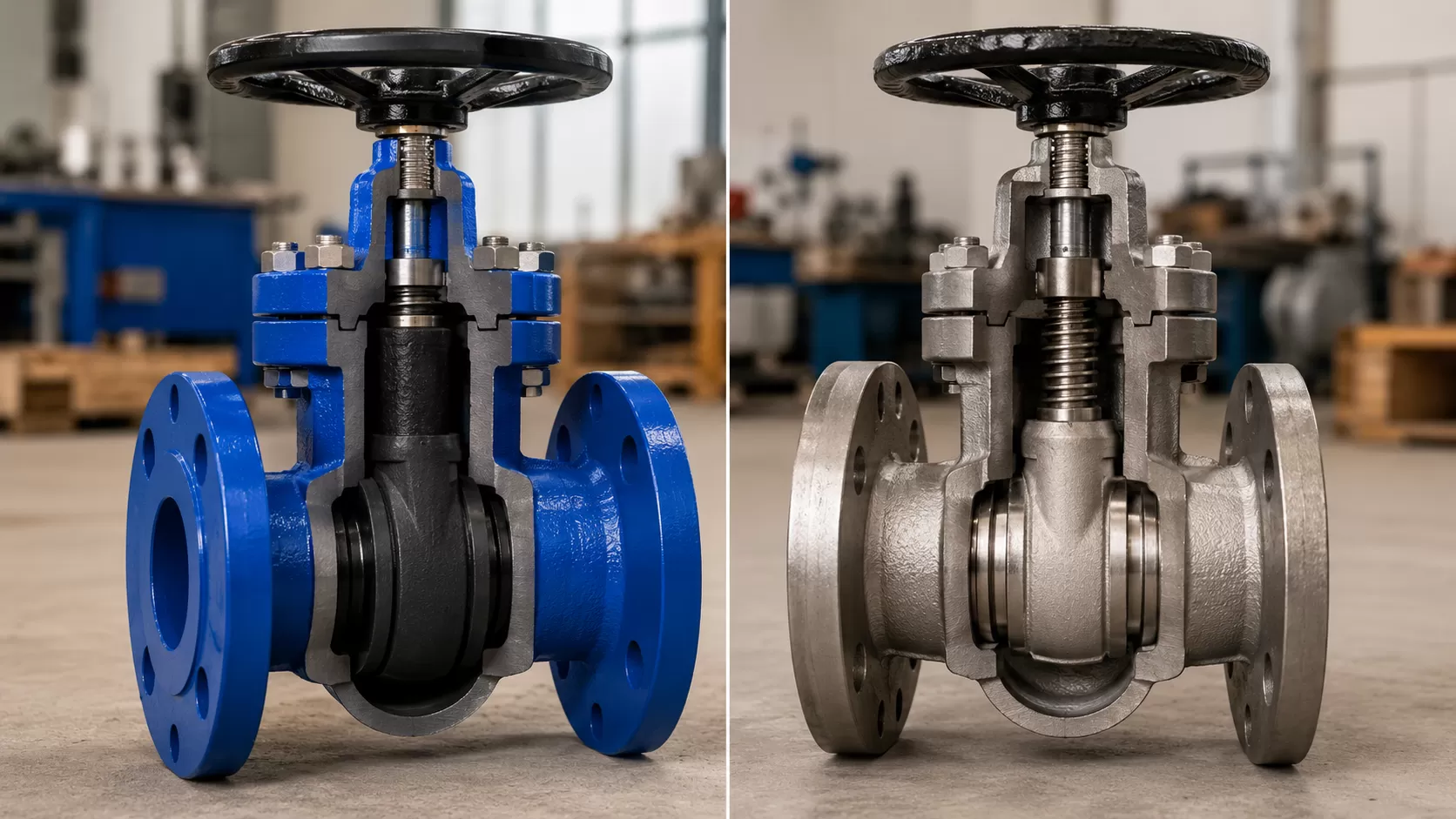
Choosing between a soft seal gate valve vs metal seat gate valve comes down to your specific project environment. Both designs serve critical roles in piping networks, but their performance profiles differ across key operational metrics.
| Performance Metric | Soft Seal Gate Valve (Resilient Seated) | Metal Seat Gate Valve (Hard Sealed) |
|---|---|---|
| Sealing Efficiency | Zero leakage isolation (Bubble-tight) | Minor permissible leakage (Class IV/V) |
| Valve Operating Torque | Low to moderate | High (Requires more effort or larger actuators) |
| Media Compatibility | Clean water, potable water, treated wastewater | Raw water, stormwater, solid-bearing fluids |
| Temperature Limit | Lower (Typically up to 180°F / 80°C) | Higher (Excellent for extreme thermal ranges) |
| Pressure Resiliency | Excellent at standard municipal pressures | Superior handling of high-pressure surges |
Sealing Efficiency & Leakage Rates
When it comes to dropping sealing leakage to zero, the resilient seated gate valve is the industry standard. Our soft seal design utilizes an EPDM encapsulated wedge that deforms slightly under compression to fill every microscopic void in the valve body. This achieves true zero leakage isolation, making it the premier choice for treated municipal water supply systems where fluid loss is unacceptable.
Conversely, a metal seated gate valve relies on machined metal-to-metal contact. While highly durable, it cannot achieve a perfect bubble-tight seal over long periods, allowing a small, standardized permissible leakage rate.
Operating Torque Requirements
Managing valve operating torque is crucial for long-term field maintenance and automation budgeting. Soft seal models require significantly less torque to close tightly because the rubber wedge seals easily against the smooth interior of the ductile iron gate valve body. Metal seat alternatives require substantially higher torque to force the metal faces together tightly enough to seal, which often necessitates larger, more expensive gear operators or actuators.
Fluid Composition & Media Compatibility
The choice of fluid dictates your seating material. Soft seal options excel in clean distribution lines but can be damaged by grit, rocks, or sharp debris. For heavy-duty applications involving raw water, stormwater, or solid-bearing fluids and wastewater, metal seats are far more resilient. The hardened metal faces can scrape past trapped solids without sustaining catastrophic gouges.
To prevent backflow or downstream contamination in these rugged setups, pairing these isolation units with a high-performance micro-resistance slow-closing check valve ensures your entire pump station remains protected against harsh solids and reverse flow.
Pressure and Temperature Resiliency
- Soft Seals: Perfect for standard municipal water pipeline gate valve specifications. However, the elastomeric materials degrade if exposed to extreme temperatures or harsh chemical dosing.
- Metal Seals: Built for the tough jobs. They maintain structural integrity and sealing capabilities even during severe pressure spikes and thermal fluctuations that would easily rupture or melt synthetic rubber compounds.
Industrial Standards & Compliance Check: AWWA C515 vs. AWWA C500
Navigating municipal water specifications in the United States requires a strict adherence to American Water Works Association (AWWA) standards. When evaluating a soft seal gate valve vs metal seat gate valve, the regulatory compliance path splits into two distinct standards: AWWA C515 and AWWA C500. Understanding these specifications is critical for proper infrastructure design.
Deciphering Modern Water Specifications
For decades, the traditional metal seated gate valve ruled municipal infrastructure under the AWWA C500 standard. This specification covers heavy-duty, bronze-fitted, double-disc gate valve designs. However, modern US water infrastructure project managers overwhelmingly specify AWWA C515 for newer installations. AWWA C515 governs reduced-wall ductile iron gate valve manufacturing, offering a lighter, higher-strength alternative that lowers freight and installation labor costs.
| Standard Feature | AWWA C515 (Resilient Seated) | AWWA C500 (Metal Seated) |
|---|---|---|
| Valve Type | Resilient seated gate valve | Double-disc or solid wedge |
| Material | High-strength Ductile Iron | Cast Iron or Ductile Iron |
| Wall Thickness | Reduced wall (High tensile strength) | Standard full wall thickness |
| Sealing Design | EPDM encapsulated wedge | Metal-to-metal (Bronze/Brass trim) |
| Common Stem Type | Non-rising stem (NRS) gate valve | NRS or Rising Stem (OS&Y) |
The Evolution from Metal to Soft Seals
The shift from AWWA C500 to AWWA C515 reflects a clear evolution in engineering priorities for the modern water pipeline gate valve. While metal-seated valves rely on precise mechanical scraping to achieve a closure, they are prone to tuberculation and debris entrapment.
We engineered our resilient seated valves to solve this problem entirely. By utilizing an EPDM encapsulated wedge, the valve compresses tightly against the smooth inside wall of the ductile iron body. This flexible sealing memory delivers zero leakage isolation, meeting the stringent requirements of modern domestic water networks without requiring the massive seating torque of old cast iron valves. Review our comprehensive valve standards guide to see how these US domestic frameworks align with global testing benchmarks.
Corrosion Protection Standards
In the United States, internal and external corrosion protection is just as vital as the structural standard itself. Modern clean water and wastewater specifications demand advanced coatings to extend the industrial valve lifespan and maintenance cycles.
- Fusion Bonded Epoxy (FBE) Coating: Both AWWA C515 and C500 valves require protective coatings, but modern resilient valves feature interior and exterior FBE coatings applied electrostatically. This creates a high-gloss, chemical-resistant barrier that prevents rust and tuberculation.
- NSF/ANSI 61 & 372 Certification: For any municipal water supply system, compliance with drinking water system components laws is non-negotiable. Our soft-seal valves feature lead-free construction and certified EPDM compounds to guarantee safe drinking water delivery.
Application Engineering: When to Specify Which Valve?
Choosing between a soft seal gate valve vs metal seat gate valve comes down to your specific pipeline environment. Getting this right means fewer service interruptions, lower maintenance costs, and a much longer system life. We design our valves to match the exact demands of modern American water infrastructure, ensuring you get the right tool for the job.
Ideal Use-Cases for Norite Soft Seal Gate Valves
For clean water applications, a resilient seated gate valve is the industry standard. These valves feature an EPDM encapsulated wedge that compresses perfectly against the ductile iron body, delivering zero leakage isolation.
- Municipal Water Supply Systems: Ideal for drinking water distribution lines where drop-tight shutoff is required to prevent water loss and contamination.
- Wastewater Treatment Plants: Perfect for secondary treatment phases, effluent lines, and filtration systems handling clean or minimally strained water.
- Non-Rising Stem (NRS) Gate Valve Setups: Excellent for buried utility lines or vault installations where space is limited and reliable bidirectional sealing performance is non-negotiable.
If your project also involves high-volume water management or emergency drainage, pairing these networks with specialized systems like our submersible axial flow pumps for flood and stormwater management ensures complete control over municipal water flow.
Ideal Use-Cases for Metal Seat Gate Valves
When the fluid gets harsh, a metal seated gate valve takes over. Built with a heavy-duty double-disc gate valve design or solid bronze/stainless steel trim, these units handle the grit that would quickly destroy a soft elastomer seal.
- Raw Water Intake: Best for handling untreated river, lake, or reservoir water containing sand, silt, and small debris.
- Solid-Bearing Fluids and Wastewater: Essential for primary sewage, sludge lines, and grit chambers where abrasive particles are constantly present.
- High-Temperature and High-Pressure Lines: Designed for industrial water loops and process piping where temperatures exceed the limits of standard rubber compounds.
Lifespan, Maintenance, and Total Cost of Ownership (TCO)
When managing a municipal water supply system, looking only at the upfront price tag of a water pipeline gate valve is a shortcut to budget overruns. Evaluating the total cost of ownership (TCO) requires balancing your initial capital expenditure (CAPEX) against long-term operational expenditure (OPEX), field maintenance reality, and asset longevity.
Initial CAPEX vs. Operational OPEX
A soft seal gate valve (resilient seated gate valve) typically offers a lower initial CAPEX. It is easier to manufacture and highly effective for standard water distribution. However, if your line carries raw water with debris, a soft seal might wear out faster, driving up OPEX through frequent replacements.
Conversely, a metal seated gate valve demands a higher upfront investment but provides immense durability in punishing environments. Over a 30-year lifecycle, paying more initially for a heavy-duty ductile iron gate valve can actually lower your overall OPEX by eliminating chronic downtime.
Failure Modes & Field Maintenance
The two valve types fail differently, which dictates your long-term industrial valve lifespan and maintenance strategy:
- Resilient Seated Gate Valves: The primary failure mode is damage to the EPDM encapsulated wedge due to sharp debris or over-tightening. The good news? A non-rising stem (NRS) gate valve with a soft seat allows for quick, straightforward inline wedge replacement without removing the entire valve body from the pipeline. For smart systems, tracking these maintenance cycles through modern predictive maintenance protocols keeps unexpected failures at bay.
- Metal Seated Gate Valves: These valves usually fail when solid-bearing fluids score the metal seats, leading to gradual leakage. Repairing a double-disc gate valve or solid wedge metal seat requires pulling the valve out of the line for machining and lapping—a labor-intensive process that spikes field maintenance costs.
Anti-Corrosion Longevity
For buried water infrastructure in the United States, corrosion is the ultimate enemy. Modern soft seal gate valves rely heavily on a high-quality fusion bonded epoxy (FBE) coating applied both internally and externally. This thick polymer barrier isolates the ductile iron body from corrosive soils and aggressive water chemistry, preventing the tuberculation that routinely plagues older metal-seated designs.
Without proper FBE protection, metal seats face accelerated galvanic and microbiological corrosion, shortening their service life and compromising their bidirectional sealing performance. Protecting the valve body from day one is what guarantees a 30+ year operational lifespan.






