
Introduction: Why Corrosion Resistance Matters in Valve Selection
Many engineers and procurement teams mistakenly equate “corrosion resistance” with “stainless steel,” overlooking the distinct challenges posed by various corrosive environments. In reality, valve material selection plays a critical role in service life, maintenance costs, and system reliability — particularly in seawater desalination, municipal wastewater, buried pipeline systems, and chemical applications.
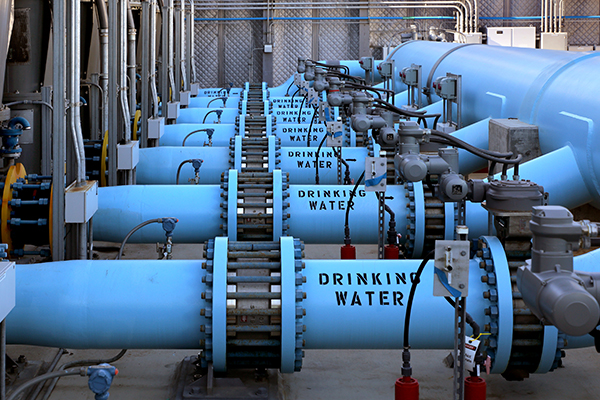
Common Corrosive Conditions & Material Selection Matrix
| Working condition | Type of corrosive medium | Recommended valve materials | Special Note |
| Seawater (desalination, water transportation) | Corrosion of electrolytes containing chloride ions | Duplex is made of stainless steel, copper alloy and epoxy-coated ductile iron | Ordinary 304 stainless steel is prone to pitting corrosion, and the FBE coating is particularly crucial |
| Urban sewage treatment | Containing hydrogen sulfide, organic corrosion, and sediment wear | Ductile iron + heavy-duty inner coating, HDPE inner lining | Microbial corrosion is prone to occur, so attention should be paid to the cleaning of dead corners |
| Buried pipelines (Soil corrosion) | Soil electrochemical corrosion and high humidity | Ductile iron + epoxy + cathodic protection, coating materials | Potential should be regularly detected to prevent corrosion caused by grounding loops |
| Chemical plant (Acid and Alkali Corrosion) | Hydrochloric acid, sulfuric acid, sodium hydroxide, etc | Alloy steel, PVDF/PTFE lining, 316L stainless steel | Media of different concentrations/temperatures react differently to materials |
Table: Different operating environments require different corrosion-resistant valve materials. One-size-fits-all stainless steel is not a viable solution in complex applications.
Practical Selection Guidelines
1、Avoid over-engineering: Stainless steel is not always necessary — evaluate based on environment and cost.
2、Pay attention to internal/external coatings like epoxy or polyolefin for buried/harsh environments.
3、Temperature and concentration changes can drastically affect corrosion behavior.
4、Always collect full operating conditions before finalizing material choices.
Norite Material Recommendations
| Corrosive Environment | Recommended Valve Materials |
| Seawater | 316 Stainless Steel, Duplex Stainless Steel, Bronze, Titanium |
| Brackish Water | 316 Stainless Steel, Epoxy-Coated Ductile Iron, Bronze |
| Municipal Wastewater | Epoxy-Coated Ductile Iron, 316 Stainless Steel, PVC |
| Industrial Wastewater | 316/304 Stainless Steel, CPVC, PTFE-Lined Valves, Alloy 20 |
| Chlorine-Containing Fluids | CPVC, PTFE, Titanium, Alloy 20 |
| Sulfuric Acid (Low Concentration) | FRP, PTFE-Lined, Alloy 20, PVC |
| Hydrochloric Acid | PTFE, PVDF, Tantalum, Glass-Lined Valves |
| Nitric Acid | 304/316 Stainless Steel, PTFE-Lined |
| Alkali / Caustic Solutions | 316 Stainless Steel, CPVC, PTFE |
| Soil Corrosion | Epoxy-Coated Ductile Iron, PE-Coated Carbon Steel, Stainless Steel |
| High Salinity Areas (Coastal) | 316 Stainless Steel, Duplex, Epoxy Coating |
| Chemical Plant (Mixed Media) | Alloy 20, Hastelloy, PTFE-Lined Valves, Titanium |

Conclusion: Rethinking Corrosion Resistance
The essence of corrosion-resistant valve selection lies in understanding the interplay between environment and material — not defaulting to stainless steel. Norite is committed to helping global engineers make smarter, more sustainable choices.
Please contact NORITE for free selection advice, product samples and project case studies.






