
Air valves for municipal pipelines help release trapped air, admit air during drainage, prevent vacuum conditions, reduce water hammer risk, and protect pumps, valves, and pipeline equipment. In long-distance water transmission systems, high-point pipeline networks, pumping stations, reservoirs, and hydropower projects, correct air valve selection is critical for stable and safe operation.
Air Valves — The Invisible Guardians of Pipeline Systems
In municipal water supply and distribution systems, attention is often centered on major control valves like gate valves or butterfly valves. However, one crucial yet frequently overlooked component is the air valve.
Especially in systems with significant elevation differences, long-distance transmission, or frequent pump operation, air accumulation can trigger water hammer, flow restriction, increased energy consumption, or even equipment damage. That’s where air valves step in.

Core Functions and Working Principles of Air Valves
| Function | Description |
| A large amount of exhaust | Large-volume air release during filling |
| Negative pressure suction | Vacuum air intake during drainage to avoid negative pressure |
| Slight exhaust | Continuous micro air release during normal operation |
Reference to the simple diagram of the working principle:

Flow Charts, Kv/Cv Curves and Technical Validation
The performance evaluation of compound exhaust valves often relies on the following parameters:

①Venting Capacity Chart
With the increase of pressure, the exhaust volume per unit time increases linearly
Different apertures (1.0mm to 4.0mm) correspond to different exhaust capacity requirements
②Cv/Kv value curve
It characterizes the flow capacity of the valve under a unit pressure difference
It can be used to precisely calculate the ventilation efficiency and pressure loss of the system
Common Selection Mistakes
Many designers or engineering parties tend to overlook the following issues in the early stage of selection:
Using only a single small-diameter exhaust valve → unable to cope with the large air volume changes during the rapid filling/drainage stage
Ignoring the elevation difference → the installation point of the exhaust valve is set unreasonably, resulting in gas accumulation
Misuse of metal seals or inferior materials → resulting in seal failure or corrosion damage
Kv/Cv parameters not evaluated → stable exhaust cannot be achieved and water hammer cannot be avoided
Recommended Solution: Dual-Chamber Combination Air Valve
Norite recommends the use of high-performance composite exhaust valves in the following operating conditions:
| Application scenarios | Features | Recommended configuration |
| Reservoir dam | The terrain has a large drop and is prone to negative pressure | Composite type, dual-chamber design |
| Hydropower station | Frequent starts and stops pose a high risk of water hammer | Spring-assisted type, high-pressure seal |
| Urban water transmission pumping station | The system is long and requires multiple exhaust points | Distributed exhaust solution, combined with check valve devices |
| High points of municipal pipeline network | High incidence points of gas accumulation | Small-aperture continuous exhaust, anti-corrosion material |
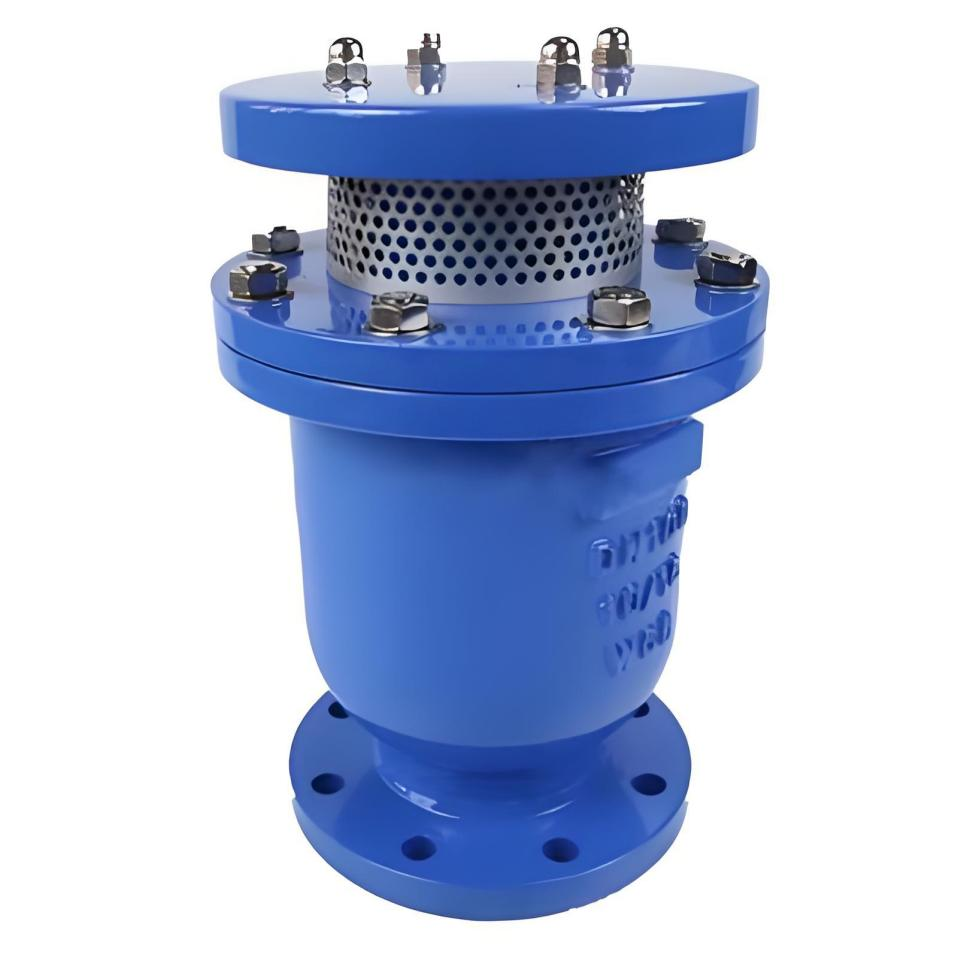
Special recommendation for the Norite model: CARX Combination Air Release Valve
(Anti-shock / nonslam)
Work pressure: PN10/16/25
Valve body material: Ductile iron + epoxy coating
Float ball material: SUS304
Sealing: EPDM/NBR are optional
The dual-channel and dual-float ball structure is suitable for high-frequency operating environments
Conclusion and Tips
Though small in size, air valves play a crucial role in pipeline operation. They improve efficiency and act as “safety valves” against costly damage or failure.
Design engineers should include air valve selection in the early design phase, paying attention to Kv values, venting rates, and strategic positioning to ensure a safe and efficient system.






