
The SLS is a single stage vertical centrifugal pump with a single-suction impeller and an in-line hydraulic casing. It is intended for clean water and compatible low-solids liquids in building water supply, HVAC circulation, irrigation and industrial water-transfer duties. The motor is arranged above the pump casing, supporting compact equipment-room and pipeline layouts.
SLS Series Product Reference Views
These images show reference configurations within the SLS vertical inline pump family. Motor, casing, coupling, flange and base details vary by pump size and the approved project configuration.
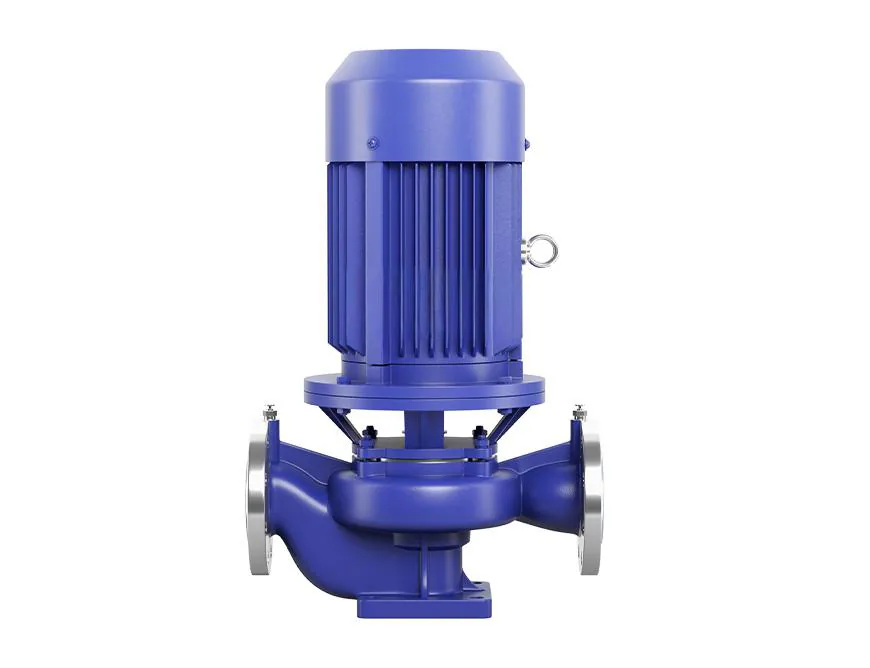 Front reference view of an SLS vertical inline pump configuration.
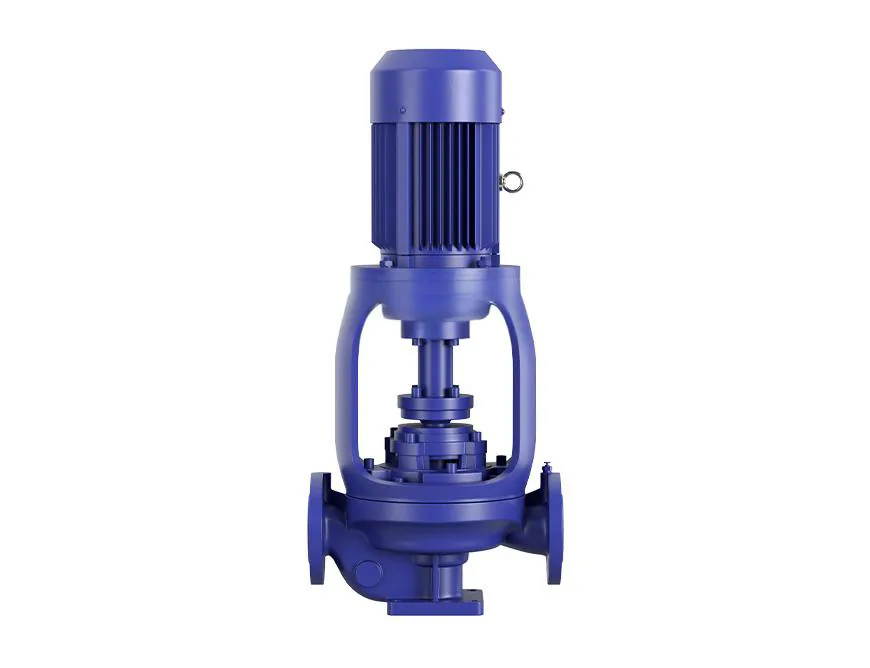 Reference view showing a different motor-support and coupling arrangement.
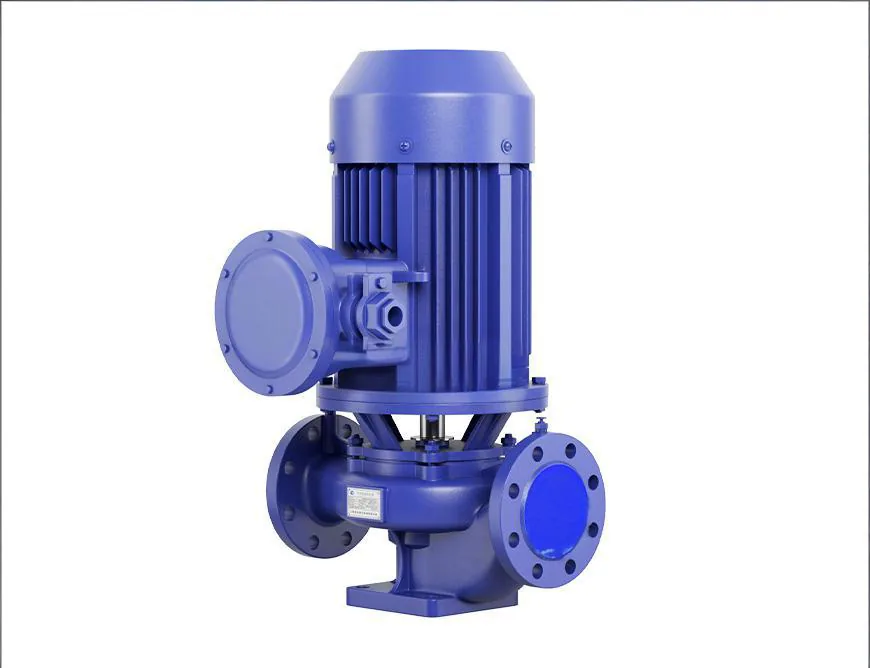 Angled reference view; final construction follows the approved model drawing.
SLS Series Technical Range
| Pump type | Single-stage, single-suction, vertical inline centrifugal pump |
|---|---|
| Flow | 1.5-2400 m³/h* |
| Head | 8-150 m* |
| Motor power | 0.18-160 kW* |
| Inlet / outlet nominal size | 15-500 mm* |
| Frequency | 50 or 60 Hz configurations* |
| Listed voltage options | 220 / 380 / 460 / 480 / 660 V* |
| Liquid temperature | Below 120°C*, subject to seal, material and operating-pressure confirmation |
| Stated solids-content limit | ≤0.1%*; particle size, hardness and basis must be reviewed for the application |
| Working pressure | Up to 1.6 MPa* |
| Performance-chart speeds | 2950, 1480 and 980 r/min |
| Material families | Cast iron; stainless steel 304, 316 and 316L; duplex 2205 and 2507; 904L, subject to model availability |
| Motor enclosure and insulation | Confirm on the selected motor datasheet and nameplate |
| Connection / flange standard | Confirm by selected model and destination market |
*These limits are not all available in one pump configuration. Final performance, pressure, temperature, motor, material, seal and connection details depend on the selected model.
How the SLS Vertical Inline Pump Works
Liquid enters the impeller eye from one side. The motor rotates one impeller, increasing liquid velocity; the casing then converts part of that velocity into pressure and directs the liquid to the discharge. Because one impeller develops the head, the SLS is a single-stage pump. “Single suction” means that liquid enters the impeller from one side.
This dry-installed vertical inline design is different from a multistage pump, vertical turbine pump, sump pump or submersible pump. Select the pump from the required duty point and installation conditions, not from the word “vertical” alone. For other layouts and pump types, review Norite’s industrial pump range.

SLS structure reference. The numbered parts are identified below.
Hydraulic components
1 Pump casing
2 Impeller
3 Impeller nut
Venting and sealing
4 Air discharge valve
5 Plug
7 Mechanical seal
8 Water-blocking ring
Drive and access
6 Pump cover
9 Motor
The reference structure places the motor above the hydraulic casing and identifies the pump cover and mechanical-seal area. The exact dismantling sequence, lifting requirements and whether connected pipework can remain in place depend on the selected model and installation. Follow the model-specific installation, operation and maintenance instructions.
Single Stage Vertical Centrifugal Pump Performance Range
The supplied SLS selection charts group model envelopes at 2950, 1480 and 980 r/min. Use them for preliminary model screening only. Every pump size has its own Q-H curve and preferred operating region, so final selection must be checked against a model-specific curve.
 Preliminary SLS performance envelope at 2950 r/min.
 Preliminary SLS performance envelopes at 1480 and 980 r/min.
Confirm before selection
- Required, normal, minimum and maximum flow
- Total dynamic head at each duty point
- Efficiency and absorbed power
- NPSHr versus available NPSH
- Correct 50 Hz or 60 Hz curve
- Materials, seal and working pressure
Where the SLS Vertical Inline Pump Fits
Building Water Supply
Clean-water transfer and pressure boosting sized from actual demand, static lift and pipeline losses.
HVAC and Hot-Water Circulation
Chilled-water, cooling-water and compatible hot-water circulation, subject to temperature, seal and material review.
Industrial Water Circulation
Transfer or circulation of clean water and compatible non-corrosive, low-solids industrial liquids.
Irrigation and Distribution
Water transfer for irrigation and distribution networks when the duty falls within the selected model’s operating curve.
Municipal Clean-Water Duties
Clean-water transfer and distribution where liquid characteristics and solids remain within confirmed pump limits.
Project-Specific Duties
Provide liquid composition, standards and site conditions before selecting materials, seals, motor and controls.
The SLS should not be selected for abrasive slurry, sewage solids or chemically aggressive liquids without a project-specific hydraulic, material and seal review. For fire-protection duties, state the required codes, approvals, driver and control package during enquiry; this page alone does not establish a certified fire-pump configuration.
Mambu Branco Water Supply Expansion

The Mambu Branco integrated water supply expansion in Sao Paulo State, Brazil, addressed insufficient intake capacity and seasonal pressure on the regional water network. The works included new intake facilities, large pumping stations and approximately 66 km of water supply pipelines.
Material Options for the Pumped Liquid
Depending on model and duty, SLS configurations may be available in cast iron, stainless steel 304, 316 or 316L, duplex stainless steel 2205 or 2507, and 904L. A material grade alone does not establish chemical compatibility. Selection should consider liquid composition, chloride content, pH, concentration, temperature, solids and cleaning chemicals.
Request a project-specific bill of materials identifying the casing, impeller, shaft-related components, fasteners, mechanical seal and elastomers.
Information Needed to Select an SLS Pump
For a useful pump selection rather than a generic quotation, provide:
Hydraulic duty
- Required, normal, minimum and maximum flow
- Total dynamic head
- Static lift and estimated pipeline losses
- Suction pressure, liquid level and elevation
Liquid and construction
- Liquid name and full composition
- Normal and maximum temperature
- Density, viscosity and solids
- Working pressure, materials and seal
Site and supply
- Indoor or outdoor ambient conditions
- Pipe size and connection standard
- Voltage, phase, frequency and control method
- Quantity, destination and project standards
If the duty varies, include every operating point and state whether the pump will run at fixed speed or with a variable-frequency drive.
Documents to Confirm Before Order
- Project-specific pump datasheet
- Selected Q-H curve with the duty point marked
- Motor rating and electrical data
- Outline and connection drawing
- Wetted-material and seal schedule
- Required inspection or test documentation
- Installation, operation and maintenance instructions
Performance and construction should be treated as confirmed only when they appear in the approved project datasheet, drawing and commercial offer.
Frequently Asked Questions
What is a single stage vertical centrifugal pump?
It is a centrifugal pump with one impeller and a vertical motor-and-pump arrangement. In the SLS design, suction and discharge are arranged in line with the piping for clean-water and compatible low-solids liquid duties.
How does an SLS vertical centrifugal pump work?
Liquid enters the impeller eye, the motor rotates the impeller to increase liquid velocity, and the casing converts part of that energy into pressure before directing the liquid to the discharge. Fill and vent the pump in accordance with the operating instructions before starting.
What is the difference between single-stage and multistage centrifugal pumps?
A single-stage pump uses one impeller. A multistage pump uses several impellers in series to generate higher head. The correct choice depends on the required flow, head and operating conditions.
Is the SLS the same as a vertical turbine or sump pump?
No. The SLS is a dry-installed vertical inline centrifugal pump with the motor above the hydraulic casing. Vertical turbine and sump pumps use different hydraulic and installation arrangements, commonly for wet-pit or deep-well service.
What liquids can an SLS pump handle?
The supplied series information covers clean water and compatible non-corrosive, low-solids liquids. The stated limits are below 120°C and solids content up to 0.1%, but actual suitability depends on the selected material, seal, pressure and liquid characteristics.
Can the SLS operate on both 50 Hz and 60 Hz power?
The documentation lists 50 Hz and 60 Hz configurations with several voltage options. Availability varies by motor, model and destination. Frequency changes speed and performance, so use the correct curve and motor nameplate data.
Can a centrifugal pump be mounted vertically?
Yes, when the pump is designed and approved for a vertical arrangement. The SLS is a vertical inline design, but a vertical unit should not be laid on its side unless the selected model’s approved drawing and manual expressly permit it. If the project requires a horizontal drive arrangement, review the SLW horizontal centrifugal pump.
What are the main types of vertical centrifugal pumps?
Common types include vertical inline pumps for in-line piping, vertical turbine pumps for wells or sumps, and vertical sump pumps for wet-pit service. Submersible pumps also operate vertically but place the motor underwater. Their installation and hydraulic arrangements are not interchangeable.
Is the SLS self-priming?
No self-priming capability is stated in the available series data. Treat the pump as non-self-priming unless the approved model documentation states otherwise, and fill and vent it before operation.
Send Your Duty Point for SLS Pump Selection
Tell us the required flow, total head, liquid, temperature, site power and material preference. Norite can review the duty point and recommend an SLS model and configuration for quotation.